 Worldlex Wiki
 Olentzero
( Learn how and when to remove this message ) A figure of Olen being carried through the streets of Barakaldo Olentzero ( Basque pronunciation: [ olents̻eɾo ] , sometimes Olentz...
( Learn how and when to remove this message ) A figure of Olen being carried through the streets of Barakaldo Olentzero ( Basque pronunciation: [ olents̻eɾo ] , sometimes Olentz...
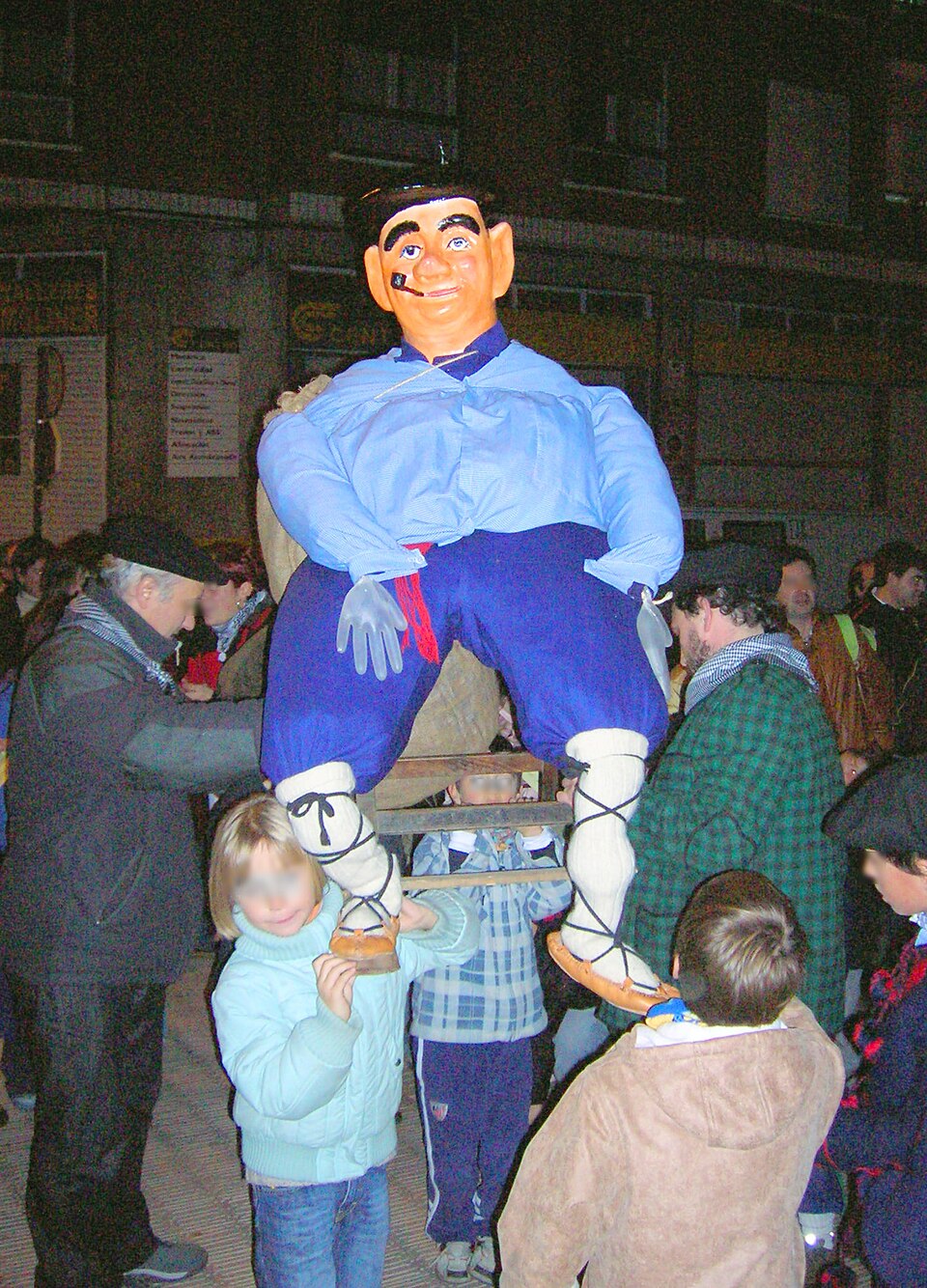
Olentzero (Basque pronunciation:[olents̻eɾo], sometimes Olentzaro or Olantzaro and Olenchero) is a character in Basque Christmas tradition. According to Basque traditions, Olentzero comes to town late at night on 24 December to drop off presents for children. In some places he arrives later, for example in Ochagavía – Otsagabia on the 27th and in Ermua on the 31st.
The name Olentzero appears in a number of variations: Onenzaro, Onentzaro, Olentzaro, Ononzaro, Orentzago and others. The earliest records give the name as Onentzaro and the name is most likely composed of two elements, on "good" plus a genitiveplural ending and the suffix-zaro which in Basque denotes a season (compare words like haurtzaro "childhood"), so "time of the good ones" literally. This suggests a derivation similar to the Spanishnochebuena.
Other theories of derivation exist but are not generally accepted:
In parts of Navarre this holiday is called xubilaro or subilaro from subil, the word for a Yule log plus the suffix -zaro. In parts of Lower Navarre the word suklaro is used, a contraction of sekularo. Sekularo has no clear etymology but is likely to be related to Latin saecularis.
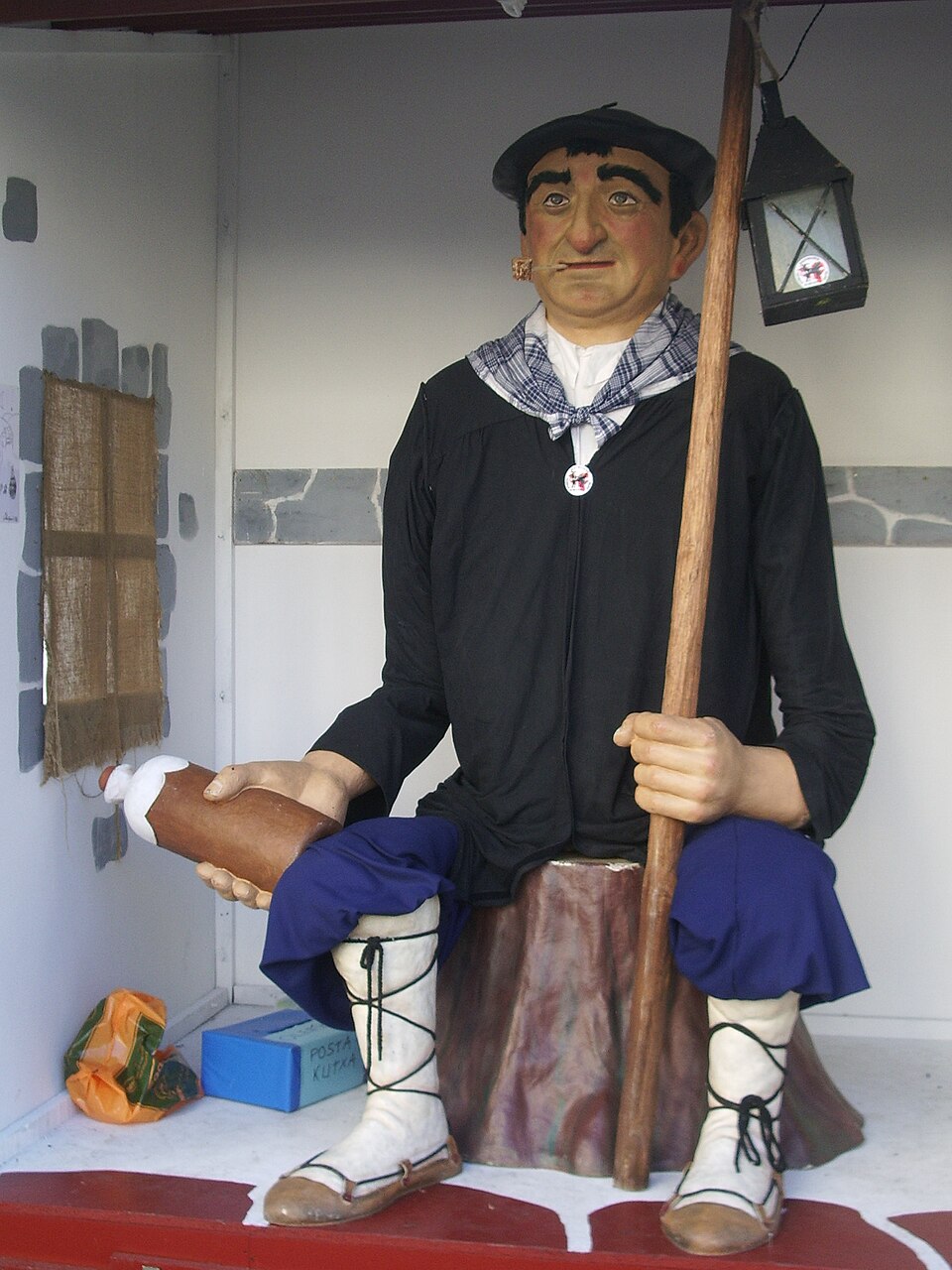
There are many variations to the Olentzero traditions and stories connected to him, sometimes varying from village to village. The first written account of Olentzero is from onenzaro, the season of the good ones").
One common version has Olentzero being one of the Jentillak, a race of Basque giants living in the Pyrenees. Legend has it that they observed a glowing cloud in the sky one day. They could not look at this bright cloud except for a very old, nearly blind man. When asked to examine it, he confirmed their fears and told them that it was a sign that Jesus would be born soon. According to some stories, the old man asked the giants to throw him off a cliff to avoid having to live through Christianisation. Having obliged him, the giants tripped on the way down and died themselves except Olentzero.
Other versions have the jentillak simply leaving, with only Olentzero remaining behind to embrace Christianity.
Other versions of the Olentzeroren kondaira, or "history of Olentzero", tell that as a new born he was abandoned in the woods and was found by a fairy who gave him the name Olentzero, bestowed gifts of strength and kindness on him and handed him to an older childless couple living alone in the woods. He turned into a strong man and charcoal burner who was also good with his hands, carving wooden toys that he would carry in a big charcoal bag to give to the children of the village. It is said that he died one day saving children from a burning house and that when he died, the fairy who had found him granted him eternal life to continue to bring joy to children and people.
Other variations of the legend, customs and the character include:
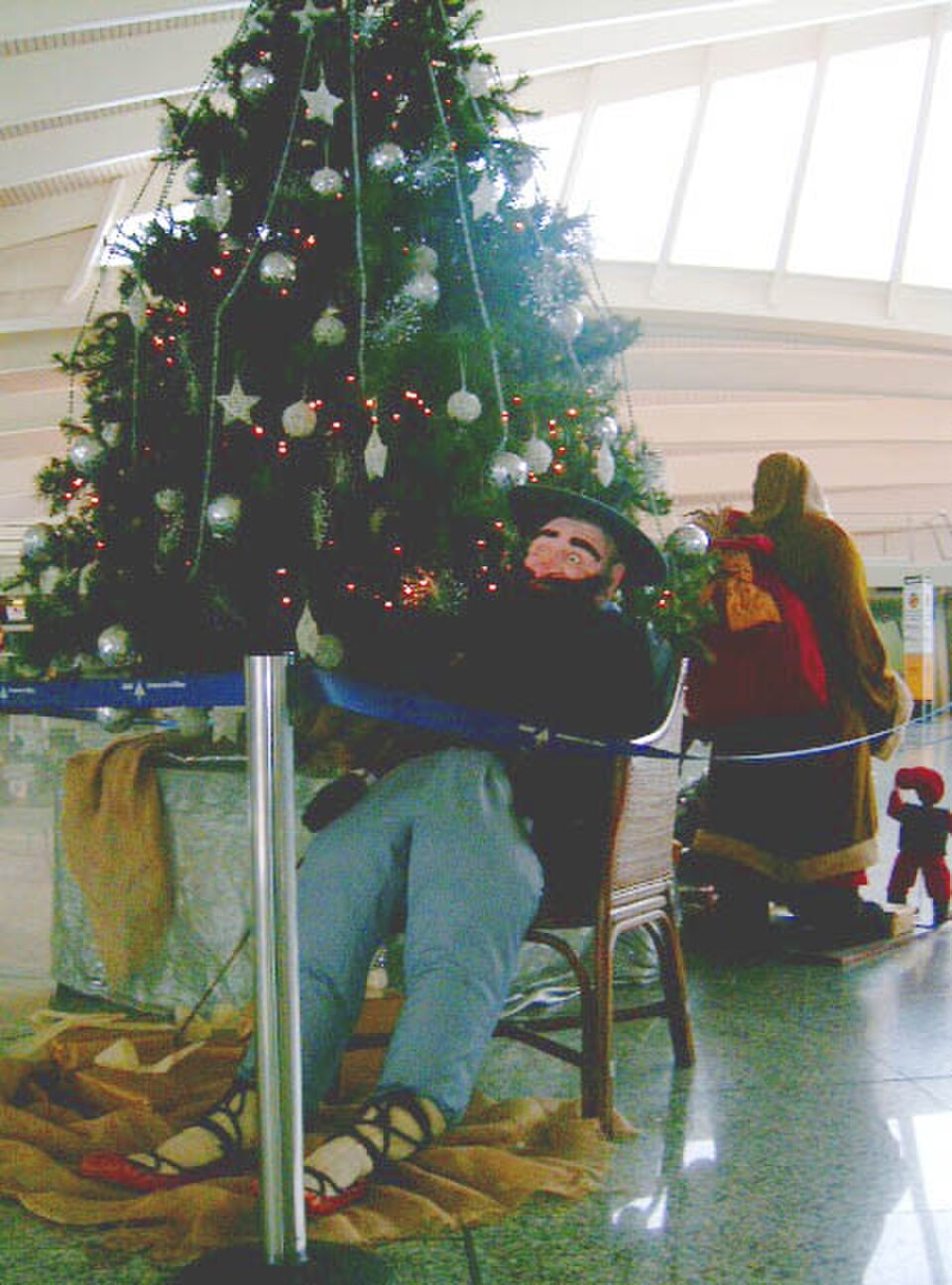
Around 1952, in Francoist Spain, a group called Zarautz began to revive the Olentzero traditions. Some of the more gruesome elements were removed to make Olentzero more suitable for young children and to remove elements which were deemed too pagan. From 1956 onwards, the revived Olentzero traditions began to spread outside those parts of Gipuzkoa where the traditions hailed from. During the 1970s he began to take on further new attributes, such as the bringer of gifts in attempts to find an alternative to the Spanish tradition of the Magi and the French Père Noël, summed up in the slogan Erregeak, españolak "the Three Wise Men are Spanish". Today Olentzero is celebrated all over the Basque Country and coexists with the Magi, Père Noël and Father Christmas, some families choosing to celebrate one or more at the same time.
In the modern version, Olentzero is depicted as a lovable character, widely attributed to being overweight, having a huge appetite and thirst. He is depicted as a Basque peasant wearing a Basque beret, a farmer's attire with traditional abarketa shoes, smoking a pipe, carrying eggs and a bottle of wine. Whether he has a beard or not is not yet an established tradition. Sometimes his face is stained with charcoal, as a sign of his trade as a charcoal-burner. On Christmas Eve, groups of people or children carry effigies of Olentzero around on a chair through the streets, singing Olentzero carols and collecting food or sweets (not unlike the American trick or treat) and the traditions surrounding the holiday of Santa Ageda in the Basque Country where oles egitea "asking for alms" is practised. At the end, it is customary in some places to burn the Olentzero, for example in Lesaka.
Variation is still common, both regionally and culturally depending on whether the pagan or Christian aspects of Olentzaro are being emphasised. Near the sea, he is usually takes on more marine attributes; inland he remains thoroughly rural in nature.
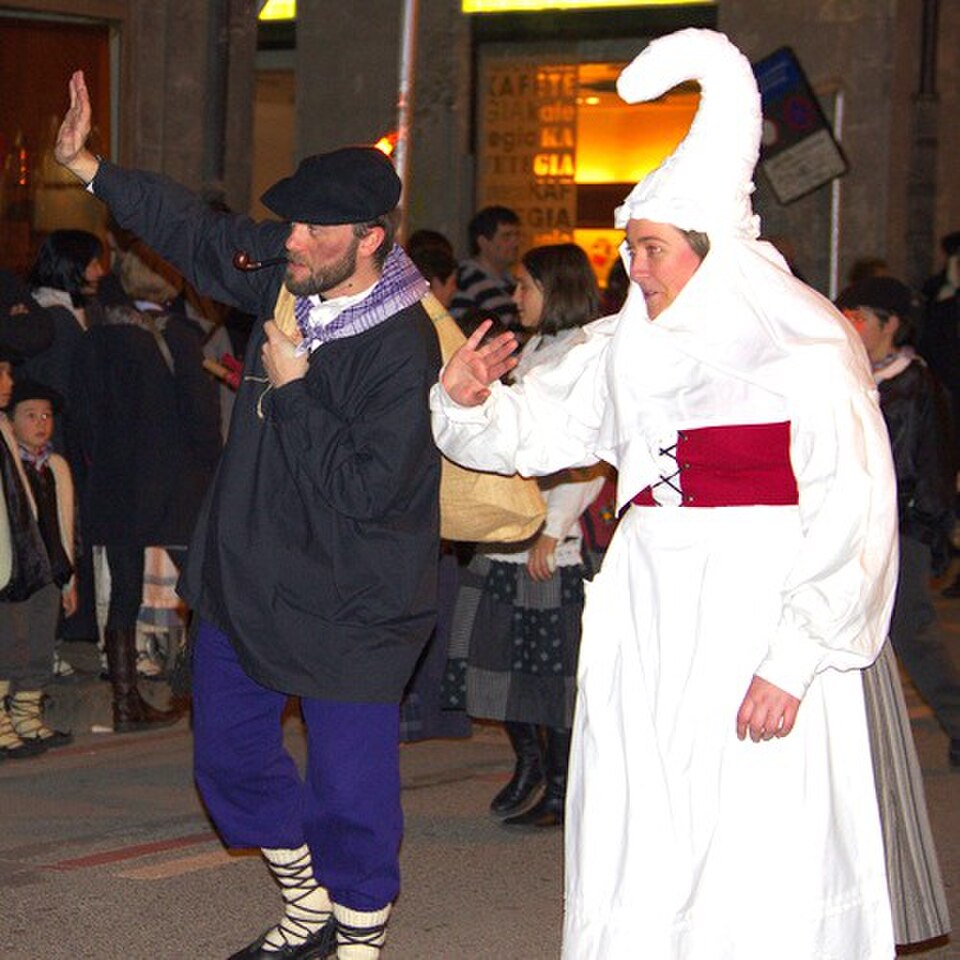
Since 1994, he has started to be accompanied by gender parity to Basque Christmas gift-bringing.
Similar to European Christmas carols, there are Olentzero kantak. Two very common ones are:
|
|
The title translates as "Olentzero big head". An arroba is an old measure equivalent to 25 lbs. or just over 11kg.
|
|