 Worldlex Wiki

Le Hollywood pré-code est une période de l' industrie cinématographique américaine qui s'est déroulée entre l'adoption généralisée du son dans les films à la fin des années 1920 et l'application des directives de censure du Motion Picture Production Code (populairement connu sous le nom de Code Hays ) en 1934. Bien que le Code Hays ait été adopté en 1930, la surveillance était médiocre et il n'a été rigoureusement appliqué que le 1er juillet 1934, avec la création de la Production Code Administration . Avant cette date, le contenu des films était davantage limité par les lois locales, les négociations entre le Studio Relations Committee (SRC) et les grands studios et l'opinion publique que par le strict respect du Code Hays, qui était souvent ignoré par les cinéastes hollywoodiens.
En conséquence, certains films de la fin des années 1920 et du début des années 1930 ont représenté ou suggéré des allusions sexuelles , des relations amoureuses et sexuelles entre des personnes blanches et noires, des grossièretés légères , la consommation de drogues illégales , la promiscuité , la prostitution , l'infidélité , l'avortement , la violence intense et l'homosexualité . Des personnages néfastes ont été vus comme tirant profit de leurs actes, dans certains cas sans répercussions significatives. Par exemple, les gangsters dans des films tels que L'ennemi public , Le Petit César et Scarface ont été considérés par beaucoup comme héroïques plutôt que méchants. Les personnages féminins forts étaient omniprésents dans des films pré-Code tels que Female , Baby Face ou Red-Headed Woman , entre autres, qui mettaient en scène des femmes indépendantes et sexuellement libérées. De nombreuses grandes stars d'Hollywood, telles que Clark Gable , Bette Davis , James Cagney , Barbara Stanwyck , Joan Blondell et Edward G. Robinson , ont fait leurs débuts à cette époque. Cependant, d'autres stars qui ont excellé durant cette période, comme Ruth Chatterton (qui a décampé en Angleterre) et Warren William (le soi-disant « roi du pré-Code », décédé en 1948), finiront par être essentiellement oubliées par le grand public en l'espace d'une génération.
À partir de la fin de l'année 1933 et jusqu'au premier semestre de l'année 1934, les catholiques américains lancèrent une campagne contre ce qu'ils considéraient comme l'immoralité du cinéma américain. Cette campagne, ainsi que la possible prise en charge par le gouvernement de la censure cinématographique et les recherches sociales semblant indiquer que les films considérés comme immoraux pouvaient encourager les mauvais comportements, constituèrent une pression suffisante pour forcer les studios à capituler devant une plus grande surveillance.
Origines du Code (1915-1930)
Les premières tentatives pour le Code
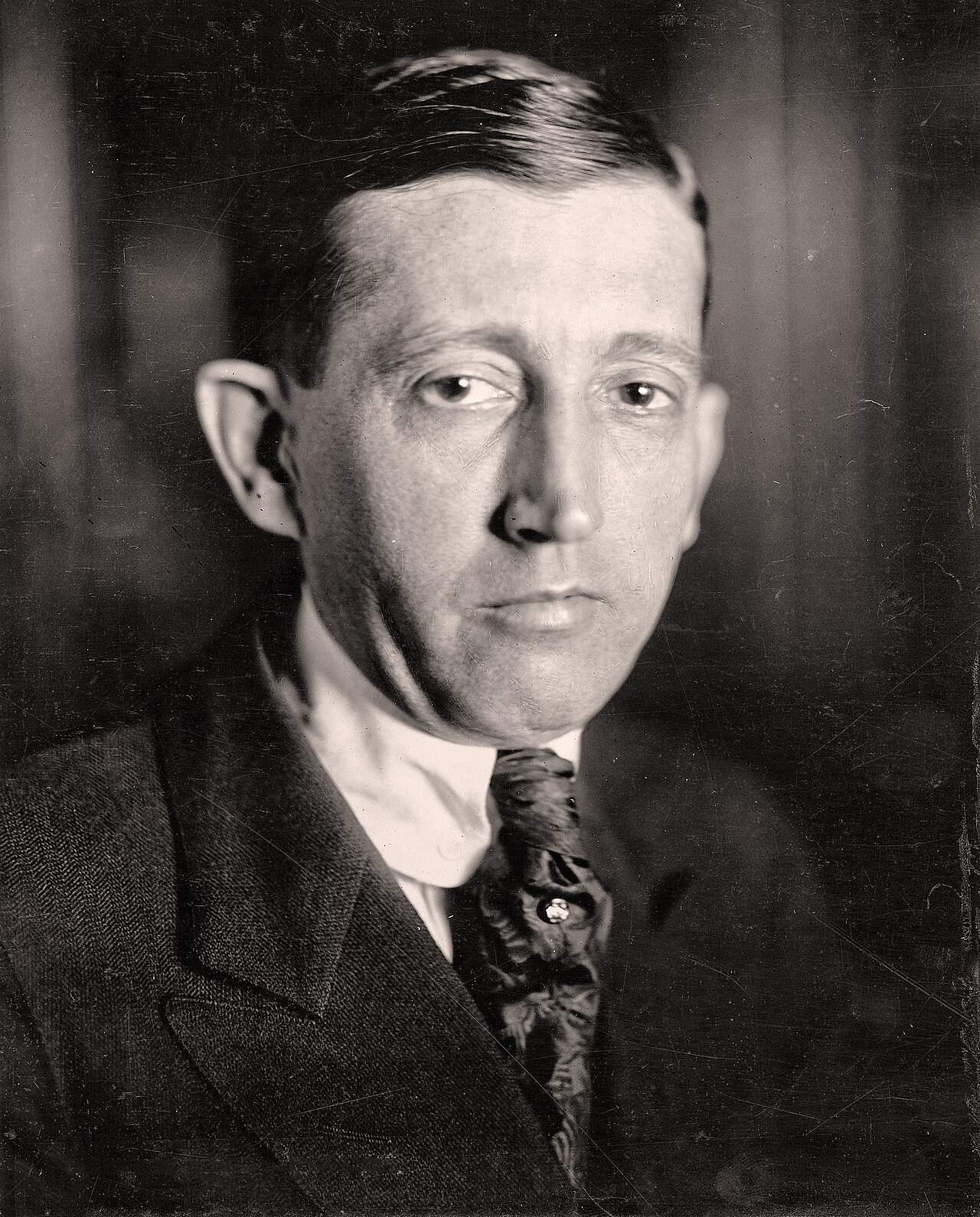
En 1922, après quelques films osés et une série de scandales hors écran impliquant des stars d'Hollywood, les studios ont fait appel à l'ancien presbytérien Will H. Hays pour réhabiliter l'image d'Hollywood. Hays, surnommé plus tard le « tsar du cinéma », a reçu la somme alors généreuse de 100 000 $ par an (équivalent à plus de 1,7 million de dollars en dollars de 2022). Hays avait auparavant été directeur général des Postes des États-Unis sous le président Warren G. Harding et à la tête du Comité national républicain . Au moment de son embauche, il était président de la Motion Picture Producers and Distributors of America (MPPDA) ; il a occupé ce poste pendant 25 ans et « a défendu l'industrie des attaques, a récité des remèdes apaisants et a négocié des traités pour cesser les hostilités ». Hollywood a imité la décision de la Ligue majeure de baseball qui avait engagé le juge Kenesaw Mountain Landis comme commissaire de la ligue l'année précédente pour apaiser les questions sur l'intégrité du baseball à la suite du scandale des paris des World Series de 1919 ; le New York Times a qualifié Hays de « Landis de l'écran ».
En 1924, Hays a présenté une série de recommandations surnommées « La Formule », que les studios ont été invités à suivre, et a demandé aux cinéastes de décrire à son bureau les intrigues des films qu'ils préparaient. La Cour suprême avait déjà décidé à l'unanimité en 1915 dans l'affaire Mutual Film Corporation v. Industrial Commission of Ohio que la liberté d'expression ne s'étendait pas aux films cinématographiques, et bien qu'il y ait eu des tentatives symboliques pour nettoyer les films auparavant, comme lorsque les studios ont formé la National Association of the Motion Picture Industry (NAMPI) en 1916, ces efforts n'ont pas eu beaucoup de résultats.
Création du Code et de son contenu
En 1929, Martin Quigley , laïc catholique et rédacteur en chef du célèbre journal professionnel Motion Picture Herald , et le père Daniel A. Lord , prêtre jésuite , créèrent un code de normes (que Hays approuva fortement) et le soumit aux studios. Les préoccupations de Lord se concentrèrent sur les effets du film sonore sur les enfants, qu'il considérait comme particulièrement sensibles à l'attrait du média. Plusieurs directeurs de studio, dont Irving Thalberg de Metro-Goldwyn-Mayer (MGM), rencontrèrent Lord et Quigley en février 1930. Après quelques révisions, ils acceptèrent les stipulations du Code. L'un des principaux facteurs de motivation de l'adoption du Code était d'éviter une intervention directe du gouvernement. Il incombait au Studio Relations Committee, dirigé par le colonel Jason S. Joy, de superviser la production cinématographique et de conseiller les studios lorsque des changements ou des coupes étaient nécessaires.
Le Code était divisé en deux parties. La première était un ensemble de « principes généraux » qui concernaient principalement la moralité. La seconde était un ensemble d'« applications particulières », une liste rigoureuse d'éléments qui ne pouvaient pas être représentés. Certaines restrictions, comme l'interdiction de l'homosexualité ou l'utilisation de jurons spécifiques, n'étaient jamais directement mentionnées mais étaient supposées être comprises sans démarcation claire. Le métissage, le mélange des races, était interdit. Le Code stipulait que la notion d'une « politique réservée aux adultes » serait une stratégie douteuse et inefficace qui serait difficile à appliquer. Cependant, il autorisait que « les esprits plus mûrs puissent facilement comprendre et accepter sans danger des sujets d'intrigues qui font du mal aux plus jeunes ». Si les enfants étaient surveillés et que les événements étaient sous-entendus de manière elliptique, le code autorisait ce que l'historien culturel de l'Université Brandeis, Thomas Doherty, appelait « la possibilité d'un crime de pensée inspiré du cinéma ».

Le Code ne visait pas seulement à déterminer ce qui pouvait être représenté à l’écran, mais aussi à promouvoir les valeurs traditionnelles. Les relations sexuelles hors mariage ne pouvaient pas être présentées comme attrayantes et belles, ni présentées d’une manière qui pourrait susciter la passion ou être présentées comme justes et autorisées. Tout acte criminel devait être puni, et ni le crime ni le criminel ne pouvaient susciter la sympathie du public. Les figures d’autorité devaient être traitées avec respect, et le clergé ne pouvait pas être présenté comme des personnages comiques ou des méchants. Dans certaines circonstances, les politiciens, les policiers et les juges pouvaient être des méchants, à condition qu’il soit clair qu’ils étaient l’exception à la règle.
L'ensemble du document contenait des connotations catholiques et stipulait que l'art devait être manipulé avec précaution car il pouvait être « moralement mauvais dans ses effets » et parce que sa « profonde signification morale » était incontestable. L'influence catholique sur le Code fut initialement gardée secrète, en raison du parti pris anticatholique de l'époque. Un thème récurrent était que « tout au long du Code, le public a la certitude que le mal est mal et le bien est bien. » Le Code contenait un addendum, communément appelé le Code de la publicité, qui réglementait les textes et les images publicitaires des films.
Application de la loi
Le 19 février 1930, Variety publie l’intégralité du contenu du Code. Bientôt, les hommes chargés de faire respecter le code – Jason Joy, qui dirigea le Comité jusqu’en 1932, et son successeur, le Dr James Wingate – seront considérés comme globalement inefficaces. Le premier film examiné par le bureau, The Blue Angel , qui fut approuvé par Joy sans révision, fut considéré comme indécent par un censeur californien. Bien qu’il y ait eu plusieurs cas où Joy ait négocié des coupures dans des films, et qu’il y ait effectivement eu des contraintes bien définies, quoique lâches, une quantité importante de matériel sordide a été portée à l’écran.
Joy devait examiner 500 films par an avec un personnel réduit et peu de pouvoir. Le bureau de Hays n'avait pas le pouvoir d'ordonner aux studios de supprimer des éléments d'un film en 1930, mais travaillait plutôt en raisonnant et parfois en plaidant avec eux. Pour compliquer les choses, le processus d'appel a finalement placé la responsabilité de prendre la décision finale entre les mains des studios eux-mêmes.
L'un des facteurs qui ont conduit à ignorer le Code était le fait que certains trouvaient cette censure prude. C'était une époque où l' ère victorienne était parfois ridiculisée comme étant naïve et arriérée. Lorsque le Code fut annoncé, The Nation , un périodique libéral, l'attaqua. La publication déclara que si le crime n'était jamais présenté sous un jour favorable, alors, pris au sens littéral, « loi » et « justice » deviendraient identiques. Par conséquent, des événements tels que le Boston Tea Party ne pouvaient pas être décrits. Et si le clergé devait toujours être présenté de manière positive, alors l'hypocrisie ne pouvait pas non plus être examinée. The Outlook était d'accord.

De plus, la Grande Dépression des années 1930 a incité les studios à produire des films au contenu osé et violent, ce qui a stimulé les ventes de billets. Bientôt, le non-respect du code est devenu un secret de polichinelle. En 1931, The Hollywood Reporter s'est moqué du code, et Variety a suivi en 1933. La même année que l' article de Variety , un scénariste réputé a déclaré que « le code moral de Hays n'est même plus une blague ; ce n'est plus qu'un souvenir. »
Les débuts du cinéma sonore
.jpg/1280px-Loretta_Young_in_Laugh,_Clown,_Laugh_(1928).jpg)
Bien que la libéralisation de la sexualité dans le cinéma américain ait augmenté au cours des années 1920, l'ère pré-Code est datée soit généralement du début de l'ère du film sonore, soit plus spécifiquement de mars 1930, lorsque le Code Hays a été rédigé pour la première fois. Malgré les protestations de la NAMPI, New York est devenu le premier État à profiter de la décision de la Cour suprême de 1915 dans l'affaire Mutual Film vs. Ohio en instituant un conseil de censure en 1921. La Virginie a suivi l'année suivante, et huit États individuels avaient un conseil à l'avènement du film sonore.
Beaucoup de ces commissions se sont révélées inefficaces. Dans les années 1920, la scène new-yorkaise, source fréquente de matériel cinématographique ultérieur, proposait des spectacles torse nu ; les performances étaient remplies de grossièretés, de sujets matures et de dialogues sexuellement suggestifs. Au début du processus de conversion du système sonore, il est devenu évident que ce qui pourrait être acceptable à New York ne le serait pas au Kansas. En 1927, Hays a suggéré aux dirigeants des studios de former un comité pour discuter de la censure cinématographique. Irving Thalberg de Metro Goldwyn Mayer (MGM), Sol Wurtzel de Fox et EH Allen de Paramount ont répondu en collaborant à une liste qu'ils ont appelée « Don'ts and Be Carefuls », basée sur des éléments contestés par les commissions de censure locales, et qui comprenait onze sujets à éviter et vingt-six à traiter avec beaucoup de précautions. La Federal Trade Commission (FTC) a approuvé la liste et Hays a créé le Studio Relations Committee (SRC) pour superviser sa mise en œuvre. Cependant, il n'existait toujours aucun moyen de faire respecter ces principes. La controverse entourant les normes cinématographiques a atteint son paroxysme en 1929.
Le réalisateur Cecil B. DeMille est responsable de la discussion croissante sur le sexe au cinéma dans les années 1920. À partir de Male and Female (1919), il a réalisé une série de films qui examinaient le sexe et ont connu un grand succès. It girl » originale d'Hollywood Clara Bow, comme The Saturday Night Kid (sorti quatre jours avant le krach boursier du 29 octobre 1929), ont mis en évidence l'attrait sexuel de Bow. Les stars des années 1920 telles que Bow, Gloria Swanson et Norma Talmadge ont librement affiché leur sexualité de manière simple.
Hollywood pendant la Grande Dépression
La Grande Dépression a été une période unique pour le cinéma aux États-Unis. Le désastre économique provoqué par le krach boursier de 1929 a changé les valeurs et les croyances américaines de diverses manières. Les thèmes de l'exceptionnalisme américain et les concepts traditionnels de réussite personnelle, d'autonomie et de dépassement des obstacles ont perdu beaucoup de poids. En raison des assurances économiques vaines et constantes des politiciens au cours des premières années de la Dépression, le public américain a développé une attitude de plus en plus blasée.

Le cynisme, la remise en cause des croyances traditionnelles et la controverse politique des films hollywoodiens de cette période reflétaient les attitudes de beaucoup de leurs clients. Le style de vie insouciant et aventureux des années 1920 avait également disparu. « Après deux ans, l' ère du jazz semble aussi lointaine que les jours d'avant la guerre », commentait F. Scott Fitzgerald en 1931. Dans le sens noté par Fitzgerald, comprendre le climat moral du début des années 1930 est complexe. Bien que les films aient connu un niveau de liberté sans précédent et aient osé dépeindre des choses qui seraient restées cachées pendant plusieurs décennies, beaucoup en Amérique considéraient le krach boursier comme le produit des excès de la décennie précédente. En repensant aux années 1920, les événements étaient de plus en plus considérés comme se produisant en prélude au krach boursier. Dans Dance, Fools, Dance (1931), des scènes de fête sordides mettant en scène des garçonnes des années 1920 sont jouées à l'excès. Joan Crawford finit par réformer ses habitudes et est sauvée ; moins chanceux est William Bakewell , qui continue sur le chemin insouciant qui le mène à son autodestruction ultime.
Pour Rain or Shine (1930), Milton Ager et Jack Yellen composèrent « Happy Days Are Here Again ». La chanson fut reprise de manière sarcastique par les personnages de plusieurs films tels que Under Eighteen (1931) et 20,000 Years in Sing Sing (1933). Moins comique était l'image de l'avenir des États-Unis présentée dans Heroes for Sale la même année (1933), dans laquelle un clochard regarde dans une nuit déprimante et proclame : « C'est la fin de l'Amérique ».
Heroes for Sale a été réalisé par le prolifique réalisateur pré-Code William Wellman et mettait en scène la star du cinéma muet Richard Barthelmess dans le rôle d'un vétéran de la Première Guerre mondiale jeté dans la rue avec une dépendance à la morphine suite à son séjour à l'hôpital. Dans Wild Boys of the Road (1933), le jeune homme joué par Frankie Darrow dirige un groupe de jeunes vagabonds démunis qui se bagarrent fréquemment avec la police. De tels gangs étaient courants ; environ 250 000 jeunes parcouraient le pays en sautant en train ou en faisant de l'auto-stop à la recherche de meilleures conditions économiques au début des années 1930.
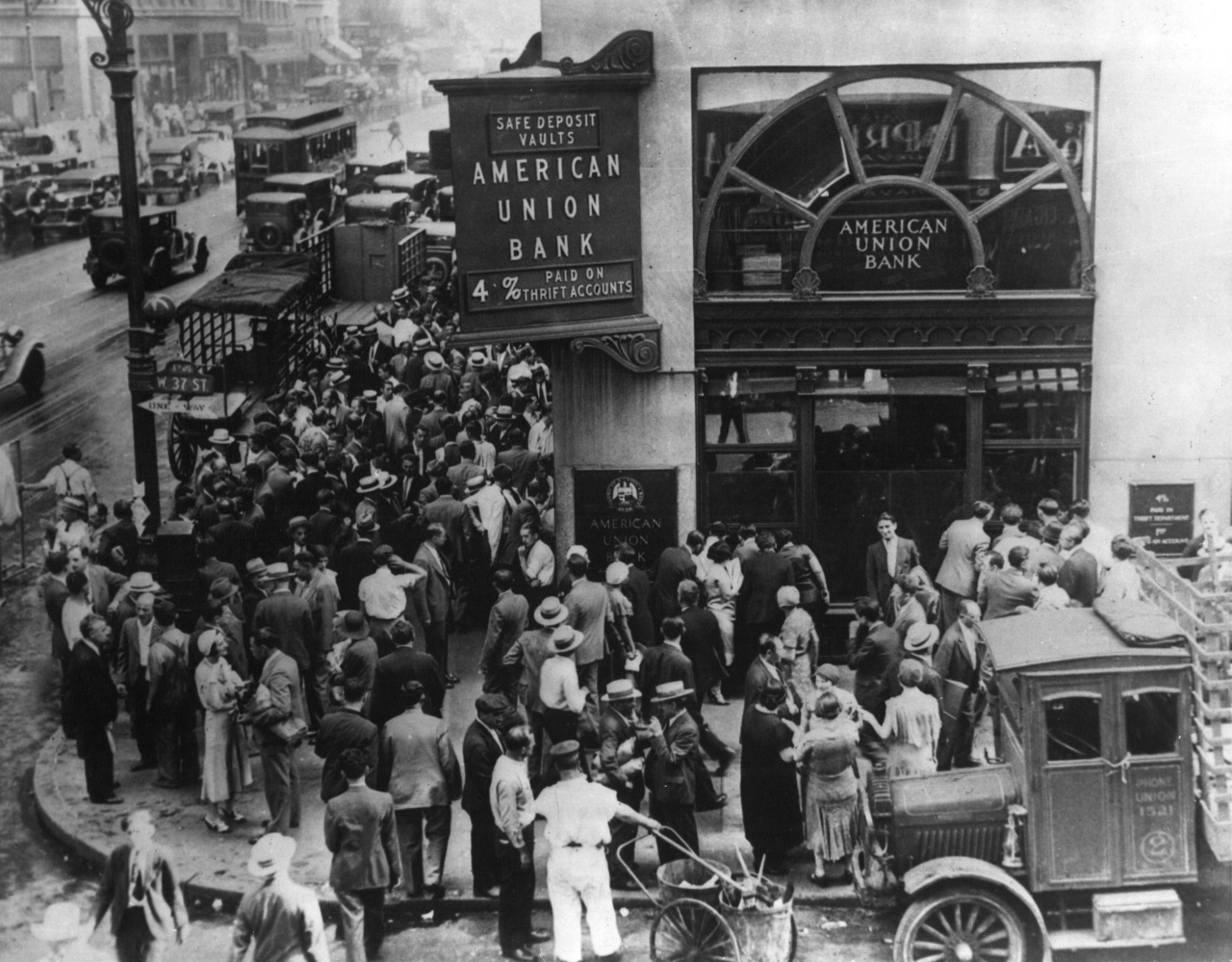
Pour compliquer les choses, l'avènement du cinéma sonore en 1927 a nécessité des dépenses considérables en studios, cabines d'enregistrement, caméras et systèmes de sonorisation, sans parler des nouvelles complications artistiques liées à la production dans un média radicalement modifié. Les studios étaient déjà dans une situation financière difficile avant le krach boursier, car le processus de conversion sonore et certains achats risqués de chaînes de cinéma avaient poussé leurs finances près du point de rupture. Ces circonstances économiques ont conduit à une perte de près de la moitié du nombre de spectateurs hebdomadaires et à la fermeture de près d'un tiers des cinémas du pays au cours des premières années de la dépression. Malgré cela, 60 millions d'Américains sont allés au cinéma chaque semaine.
Outre les réalités économiques de la conversion au son, il y avait des considérations artistiques. Les premiers films sonores étaient souvent réputés pour être trop verbeux. En 1930, Carl Laemmle critiquait le bavardage omniprésent des films sonores, et le réalisateur Ernst Lubitsch se demandait à quoi servait la caméra si les personnages devaient raconter toute l'action à l'écran. L'industrie cinématographique a également résisté à la concurrence de la radio domestique, et souvent les personnages des films se sont donné beaucoup de mal pour dénigrer les autres médias. L'industrie cinématographique n'a cependant pas hésité à utiliser le nouveau média pour diffuser des publicités pour ses projets, et a parfois transformé des stars de la radio en interprètes de courts métrages pour tirer parti de leur public intégré.
Sous la surface de la vie américaine pendant la Grande Dépression bouillonnait la peur de la foule en colère, dépeinte dans une hystérie paniquée dans des films tels que Gabriel Over the White House (1933), The Mayor of Hell (1933) et American Madness (1932). Des plans larges massifs de hordes en colère, comprenant parfois des centaines d'hommes, se précipitent dans l'action avec une uniformité terrifiante et efficace. Des groupes d'hommes agités faisant la queue pour obtenir du pain, flânant dans des camps de vagabonds ou marchant dans les rues en signe de protestation devinrent un spectacle courant pendant la Grande Dépression. Les manifestations de l'Armée des Bonus des vétérans de la Première Guerre mondiale sur la capitale à Washington, DC, contre lesquelles Hoover déclencha une répression brutale, furent à l'origine de nombreuses représentations hollywoodiennes. Bien que les questions sociales aient été examinées plus directement à l'époque pré-Code, Hollywood ignora encore largement la Grande Dépression, car de nombreux films cherchèrent à atténuer les angoisses des clients plutôt qu'à les inciter.
Hays a fait remarquer en 1932 :
La fonction des films est de DIVERTIR. ... Nous devons garder cela à l'esprit à tout moment et nous devons constamment réaliser qu'il est fatal de laisser notre préoccupation pour les valeurs sociales nous conduire dans le domaine de la propagande... Le cinéma américain... n'a aucune obligation civique plus grande que la présentation honnête d'un divertissement propre et maintient qu'en fournissant un divertissement efficace, exempt de propagande, nous servons un objectif élevé et autosuffisant.
Films à problèmes sociaux
Hays et d'autres, comme Samuel Goldwyn , pensaient manifestement que les films représentaient une forme d'évasion qui avait un effet palliatif sur les cinéphiles américains. Goldwyn avait inventé le célèbre dicton « Si vous voulez envoyer un message, appelez Western Union » à l'époque pré-Code. Cependant, la MPPDA a adopté la position opposée lorsqu'elle a été interrogée sur certains films dits « à message » devant le Congrès en 1932, affirmant que le désir de réalisme du public avait conduit à la représentation de certains problèmes sociaux, juridiques et politiques peu recommandables dans les films.

La durée des films pré-Code était généralement relativement courte, mais cette durée de diffusion nécessitait souvent un matériel plus serré et n'affectait pas l'impact des films à message. Employees' Entrance (1933) a reçu la critique suivante de Jonathan Rosenbaum en 1985 : « En tant qu'attaque contre le capitalisme impitoyable, il va beaucoup plus loin que des efforts plus récents tels que Wall Street , et il est étonnant de voir à quel point l'intrigue et les personnages sont gracieusement intégrés en 75 minutes. » Le film mettait en vedette la mégastar pré-Code Warren William (surnommé plus tard « le roi du pré-Code » ), « à son pire magnétique », jouant un directeur de grand magasin particulièrement vil et sans cœur qui, par exemple, licencie deux employés masculins de longue date, dont l'un se suicide en conséquence. Il menace également de licencier le personnage de Loretta Young , qui prétend être célibataire pour rester employée, à moins qu'elle ne couche avec lui, puis tente de ruiner son mari après avoir appris qu'elle est mariée.
Les films qui exposaient une position sur un problème social étaient généralement qualifiés de « films de propagande » ou de « prêches ». Contrairement à la position résolument républicaine de Goldwyn et de la MGM sur les films à caractère social, Warner Brothers, dirigé par le défenseur du New Deal Jack L. Warner , était le plus important producteur de ce type de films et préférait qu'on les appelle « histoires d'américanisme ». L'historien pré-code Thomas Doherty a écrit que deux éléments récurrents marquaient les soi-disant prêches. « Le premier est la préface disculpatoire ; le second est le prélude de l'ère du jazz . » La préface était essentiellement une version adoucie d'un avertissement destiné à calmer toute personne du public qui n'était pas d'accord avec le message du film. Le prélude de l'ère du jazz était presque singulièrement utilisé pour jeter la honte sur le comportement tapageur des années 1920.
Cabin in the Cotton (1932) est un film à message de Warner Bros. sur les maux du capitalisme. Le film se déroule dans un État du Sud non spécifié où les travailleurs reçoivent à peine de quoi survivre et sont exploités en se voyant facturer des taux d'intérêt exorbitants et des prix élevés par des propriétaires fonciers sans scrupules. Le film est résolument anticapitaliste ; cependant, sa préface affirme le contraire :
Dans de nombreuses régions du Sud, il existe aujourd'hui un conflit sans fin entre les riches propriétaires terriens, appelés planteurs, et les pauvres cueilleurs de coton, appelés « peckerwoods ». Les planteurs fournissent aux fermiers les besoins élémentaires de la vie quotidienne et, en échange, ces derniers travaillent la terre année après année. On pourrait écrire une centaine de volumes sur les droits et les torts des deux parties, mais l'objectif des producteurs de Cabin in the Cotton n'est pas de prendre parti. Nous nous intéressons uniquement à l'effort de décrire ces conditions.
Mais à la fin, les planteurs admettent leurs torts et acceptent une répartition plus équitable du capital.

L'homme d'affaires avare est resté un personnage récurrent dans le cinéma pré-Code. Dans The Match King (1932), Warren William a joué un industriel basé sur l'entrepreneur suédois réel Ivar Kreuger , lui-même surnommé le « Match King », qui tente de monopoliser le marché mondial des allumettes. Le personnage ignoble de William, Paul Kroll, commet des vols, des fraudes et des meurtres en passant du statut de concierge à celui de capitaine d'industrie. Lorsque le marché s'effondre lors du krach de 1929, Kroll est ruiné et choisit le suicide plutôt que l'emprisonnement. William a joué un autre homme d'affaires sans scrupules dans Skyscraper Souls (1932) : David Dwight, un riche banquier qui possède un bâtiment portant son nom et plus grand que l' Empire State Building . Il trompe tous ceux qu'il connaît et les réduit à la pauvreté pour s'approprier la richesse des autres. Il est finalement abattu par sa secrétaire ( Verree Teasdale ), qui met alors fin au film et à sa propre vie en tombant du toit du gratte-ciel.
La méfiance et l'aversion des Américains envers les avocats étaient un sujet fréquent de dissection dans des films à problèmes sociaux tels que Lawyer Man (1933), State's Attorney et The Mouthpiece (1932). Dans des films tels que Paid (1930), le système judiciaire transforme des personnages innocents en criminels. La vie du personnage de Joan Crawford est ruinée et son intérêt romantique est exécuté afin qu'elle puisse vivre libre, bien qu'elle soit innocente du crime pour lequel le procureur veut la condamner. L'hypocrisie religieuse a été abordée dans des films tels que The Miracle Woman (1931), avec Barbara Stanwyck et réalisé par Frank Capra .
De nombreux films d'avant le Code ont traité des réalités économiques d'un pays qui se bat pour trouver son prochain repas. Dans Blonde Venus (1932), le personnage de Marlene Dietrich a recours à la prostitution pour nourrir son enfant, et le personnage de Claudette Colbert dans It Happened One Night (1934) reçoit sa revanche pour avoir jeté un plateau de nourriture par terre en se retrouvant plus tard sans nourriture ni ressources financières. Le personnage de Joan Blondell dans Big City Blues (1932) reflète qu'en tant que chorus girl , elle recevait régulièrement des diamants et des perles en cadeau, mais doit désormais se contenter d'un sandwich au corned-beef. Dans Union Depot (1932), Douglas Fairbanks Jr. met un repas succulent comme premier point à l'ordre du jour de son itinéraire après avoir gagné de l'argent.
Communiqués politiques

Compte tenu des circonstances sociales, les films à caractère politique ridiculisent les hommes politiques et les présentent comme des maladroits, des scélérats et des menteurs incompétents. Dans The Dark Horse (1932), Warren William est de nouveau enrôlé, cette fois pour faire élire un imbécile qui se présente par accident au poste de gouverneur. Le candidat remporte l'élection malgré ses mésaventures incessantes et embarrassantes. Washington Merry-Go-Round dépeint l'état d'un système politique bloqué au point mort. Columbia Pictures a envisagé de sortir le film avec une scène de l'exécution publique d'un homme politique comme point culminant avant de décider de la couper.
Cecil B. DeMille a sorti This Day and Age en 1933, et il contraste fortement avec ses autres films de l'époque. Tourné peu de temps après que DeMille ait terminé une tournée de cinq mois en Union soviétique , This Day and Age se déroule en Amérique et met en scène plusieurs enfants torturant un gangster qui s'est enfui avec le meurtre d'un commerçant local populaire. On voit les jeunes plonger le gangster dans une cuve de rats lorsque la police arrive, et leur réponse est d'encourager les jeunes à continuer. Le film se termine avec les jeunes emmenant le gangster devant un juge local et forçant le magistrat à mener un procès dont l'issue ne fait aucun doute.
Le besoin de dirigeants forts capables de prendre les choses en main et de sortir l'Amérique de sa crise est illustré par Gabriel Over the White House (1933), un film sur un dictateur bienveillant qui prend le contrôle des États-Unis. Walter Huston joue le rôle d'un président faible et inefficace (probablement inspiré de Hoover) qui est habité par l'archange Gabriel après avoir été assommé. Le comportement de l'esprit est similaire à celui d' Abraham Lincoln . Le président résout la crise du chômage dans le pays et exécute un criminel de type Al Capone qui a continuellement bafoué la loi.
Les dictateurs n'étaient pas seulement glorifiés dans la fiction. Mussolini Speaks (1933), produit par Columbia, était un hymne de 76 minutes au leader fasciste , narré par le commentateur radio de la NBC Lowell Thomas . Après avoir montré certains des progrès réalisés par l'Italie au cours des dix années de règne de Mussolini , Thomas déclare : « C'est une époque où un dictateur est utile ! » Le film a été vu par plus de 175 000 personnes en liesse au cours de ses deux premières semaines au caverneux Palace Theater d' Albany, New York .
L'élection de Franklin Delano Roosevelt (FDR) en 1932 a calmé l'affection du public pour les dictateurs. Alors que le pays était de plus en plus fasciné par FDR, qui était présent dans d'innombrables actualités , il manifestait moins de désir pour des formes alternatives de gouvernement. De nombreux films hollywoodiens reflétaient ce nouvel optimisme. Heroes for Sale , bien qu'étant un film extrêmement sombre et parfois anti-américain, se termine sur une note positive car le New Deal apparaît comme un signe d'optimisme. Lorsque Wild Boys of the Road (1933), réalisé par William Wellman , arrive à sa conclusion, un jeune délinquant dépossédé est au tribunal en attente d'une peine de prison. Cependant, le juge libère le garçon, lui révélant le symbole du New Deal derrière son bureau et lui dit que « les choses vont aller mieux ici maintenant, pas seulement ici à New York, mais dans tout le pays ». Le box-office a été victime de cet espoir : Gabriel Over the White House , dont le tournage a débuté pendant le malaise de l'ère Hoover et qui a cherché à en tirer profit. Au moment de sa sortie, le 31 mars 1933, l'élection de FDR avait suscité un niveau d'espoir en Amérique qui rendait le message du film obsolète.
L'arrivée au pouvoir d' Adolf Hitler en Allemagne et les politiques antisémites de son régime ont eu un impact considérable sur le cinéma américain d'avant le Code. Bien qu'Hitler soit devenu impopulaire dans de nombreuses régions des États-Unis, l'Allemagne importait toujours de gros volumes de films américains et les studios voulaient apaiser le gouvernement allemand. L'interdiction des Juifs et les représentations négatives de l'Allemagne par le gouvernement d'Hitler ont même conduit à une réduction significative du travail pour les Juifs à Hollywood jusqu'après la fin de la Seconde Guerre mondiale. En conséquence, seuls deux films à problèmes sociaux sortis par des sociétés cinématographiques indépendantes ont abordé la manie en Allemagne pendant la période pré-Code ( Sommes-nous civilisés ? et Hitler's Reign of Terror ).
En 1933, Herman J. Mankiewicz et le producteur Sam Jaffe annoncèrent qu'ils travaillaient sur un film, intitulé Mad Dog of Europe , qui devait être une attaque à grande échelle contre Hitler. Jaffe avait quitté son emploi chez RKO Pictures pour réaliser le film. Hays convoqua le duo dans son bureau et leur dit de cesser la production car ils causaient des maux de tête inutiles aux studios. L'Allemagne avait menacé de saisir toutes les propriétés des producteurs hollywoodiens en Allemagne et d'interdire l'importation de tout futur film américain.
Films policiers
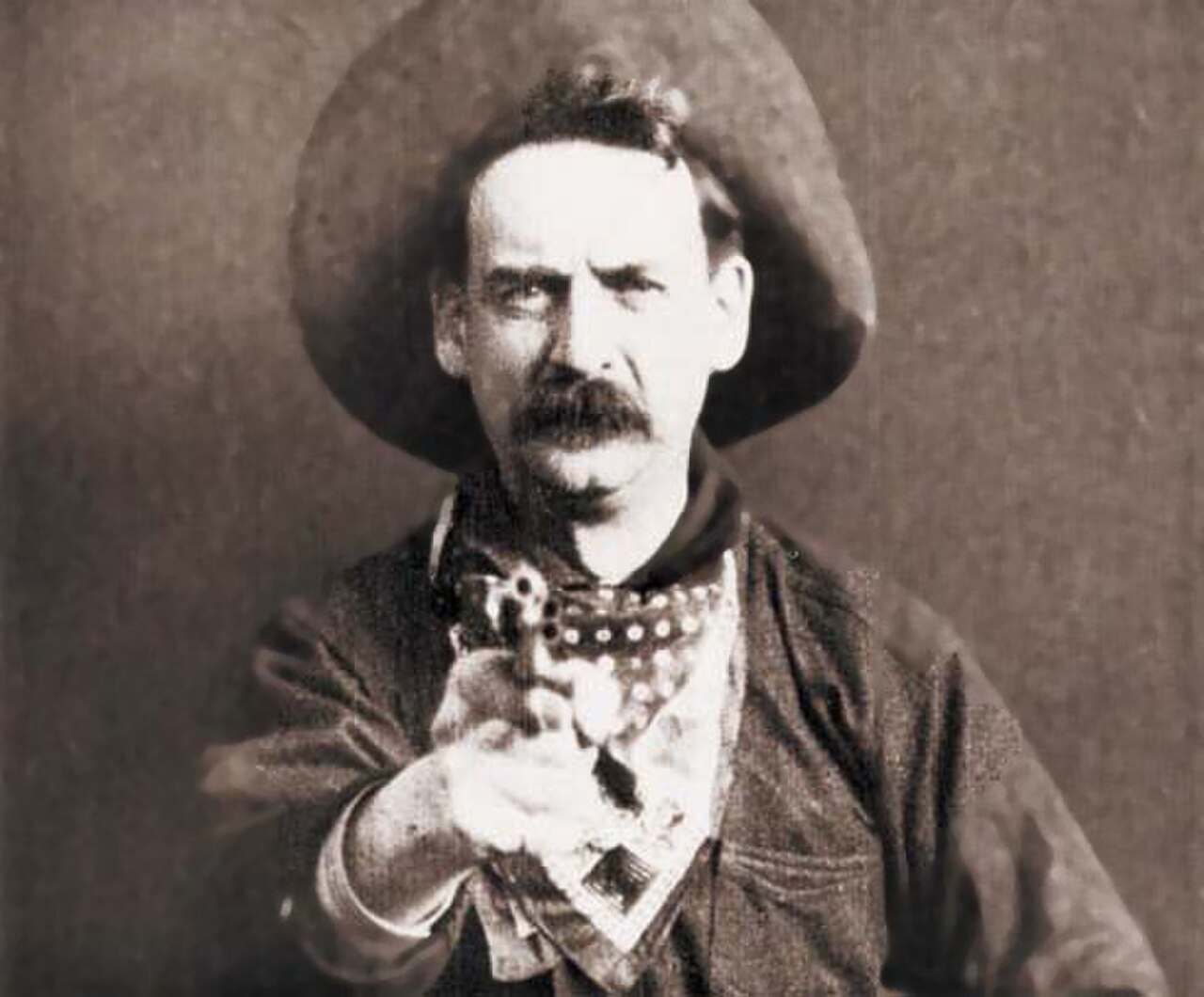
Au début des années 1900, les États-Unis étaient encore principalement un pays rural, en particulier en termes d'identité. The Musketeers of Pig Alley (1912) de DW Griffith est l'un des premiers films américains à présenter le crime organisé urbain. la prohibition en 1920 a créé un environnement dans lequel ceux qui souhaitaient consommer de l'alcool devaient souvent s'associer à des criminels, en particulier dans les zones urbaines. Néanmoins, le genre du crime urbain a été largement ignoré jusqu'en 1927, lorsque Underworld , qui est reconnu comme le premier film de gangsters, est devenu un succès surprise.
Selon l' entrée de l'Encyclopédie d'Hollywood sur Underworld , « le film a établi les éléments fondamentaux du film de gangsters : un héros voyou, des rues de ville menaçantes et plongées dans la nuit, des putes et un final enflammé dans lequel les flics abattent le protagoniste. » Des films de gangsters tels que Thunderbolt (1929) et Doorway to Hell (1930) ont été publiés pour capitaliser sur la popularité d' Underworld , Thunderbolt étant décrit comme « un remake virtuel » d' Underworld . D'autres films policiers de la fin des années 1920 ont étudié le lien entre les gangsters et les productions de Broadway dans des films tels que Lights of New York (1928), Tenderloin (1928) et Broadway (1929).
Le Hays Office n'avait jamais officiellement recommandé l'interdiction de la violence sous quelque forme que ce soit dans les années 1920 (contrairement aux blasphèmes, au trafic de drogue ou à la prostitution), mais conseillait de la traiter avec prudence. Le comité de censure de New York était plus minutieux que celui de tout autre État, ne manquant qu'environ 50 des 1 000 à 1 300 publications annuelles du pays.
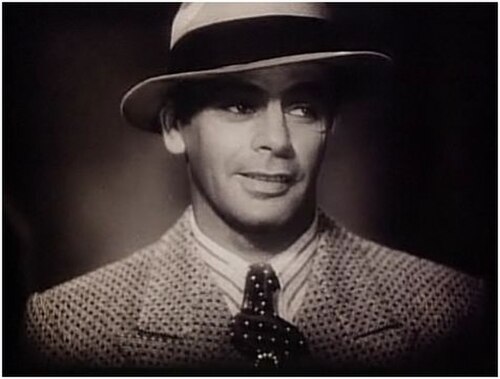
De 1927 à 1928, les scènes violentes supprimées comprenaient celles dans lesquelles une arme était pointée vers la caméra ou « sur ou dans le corps d'un autre personnage ». Sont également susceptibles d'être censurées les scènes impliquant des mitraillettes, des criminels tirant sur des agents des forces de l'ordre, des coups de couteau ou des coups de couteau (le public considérait les coups de couteau comme plus dérangeants que les fusillades), des coups de fouet, des étouffements, des tortures et des électrocutions, ainsi que les scènes perçues comme instructives pour le public sur la façon de commettre un crime. La violence sadique et les plans de réaction montrant les visages des individus victimes de violences étaient considérés comme des zones particulièrement sensibles. Le Code a par la suite recommandé d'interdire les scènes montrant des vols, des vols, des ouvertures de coffres-forts, des incendies criminels, « l'utilisation d'armes à feu », « le dynamitage de trains, de machines et de bâtiments » et « des meurtres brutaux », au motif qu'elles seraient rejetées par les censeurs locaux.
Naissance du gangster hollywoodien
Aucun genre cinématographique de l'ère pré-code n'était plus incendiaire que le film de gangsters ; ni les prêches ni les films de vice n'ont autant outragé les gardiens de la morale ou énervé les pères de la ville que les scénarios de haut calibre qui ont fait des héros de l'écran des tueurs de pierre.
— Thomas P. Doherty, historien pré-code
Au début des années 1930, plusieurs criminels réels sont devenus célèbres. Deux d'entre eux ont particulièrement captivé l'imagination américaine : Al Capone et John Dillinger . Des gangsters comme Capone ont transformé la perception de villes entières. Capone a donné à Chicago sa « réputation de lieu classique du gangsterisme américain, un paysage urbain où des roadsters blindés avec des voyous armés de mitraillettes sur des marchepieds dévalaient State Street en tirant des balles dans les vitrines des fleuristes et en tuant la concurrence dans des garages éclaboussés de sang ». Capone est apparu sur la couverture du magazine Time en 1930. Deux grands studios hollywoodiens lui ont même proposé des sommes à sept chiffres pour apparaître dans un film, mais il a refusé.
Dillinger devint une célébrité nationale en tant que braqueur de banque qui échappa à l'arrestation et s'échappa de prison à plusieurs reprises. Il était devenu le hors-la-loi public le plus célèbre depuis Jesse James . Son père apparut dans une série d'actualités populaires, donnant à la police des conseils pratiques sur la façon d'attraper son fils. La popularité de Dillinger augmenta si rapidement que Variety plaisanta en disant que « si Dillinger reste en liberté beaucoup plus longtemps et que davantage d'interviews de ce type sont obtenues, des pétitions pourraient circuler pour faire de lui notre président. » Hays écrivit un câblogramme à tous les studios en mars 1934 exigeant que Dillinger ne soit représenté dans aucun film.
The genre entered a new level following the release of Little Caesar (1931), which featured Edward G. Robinson as gangster Rico Bandello. Caesar, along with The Public Enemy (starring James Cagney) and Scarface (1932) (starring Paul Muni), were, by standards of the time, incredibly violent films that created a new type of anti-hero. Nine gangster films were released in 1930, 26 in 1931, 28 in 1932 and 15 in 1933, when the genre's popularity began to subside after the end of Prohibition. The backlash against gangster films was swift. In 1931, Jack Warner announced that his studio would stop making them and that he himself had never allowed his 15-year-old son to see them.
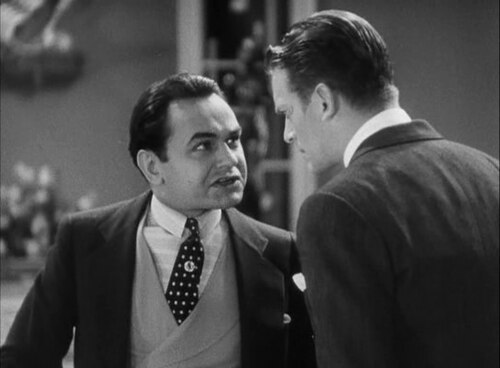
Little Caesar is generally considered the grandfather of gangster films. After its release, James Wingate, who then headed New York's censorship board, told Hays that he was flooded with complaints from people who saw children in theaters nationwide "applaud the gang leader as a hero". The success of Little Caesar inspired Fox's The Secret Six (1931) and Quick Millions (1931), and Paramount's City Streets (1931), but the next big Hollywood gangster would come from Warners.

William Wellman's The Public Enemy (1931) featured James Cagney as Tom Powers. In the notorious "grapefruit scene", when Powers's girlfriend (Mae Clarke) angers him during breakfast, he shoves half a grapefruit in her face. Cagney's character behaved even more violently toward women in the gangster film Picture Snatcher (1933); in one scene, he knocks out an amorous woman whose feelings he does not reciprocate and violently throws her into the backseat of his car. In April 1931, the same month as the release of The Public Enemy, Hays recruited former police chief August Vollmer to conduct a study on the effect gangster pictures had on children. After he had finished his work, Vollmer stated that gangster films were innocuous and even overly favorable in depicting the police. Although Hays used the results to defend the film industry, the New York State censorship board was not impressed, and from 1930 through 1932, it removed 2,200 crime scenes from films.
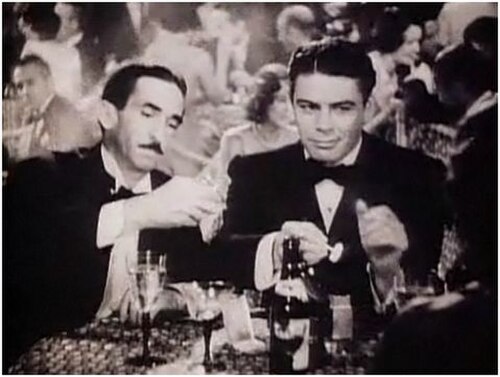
Some critics have named Scarface (1932) as the most incendiary pre-Code gangster film. Directed by Howard Hawks and starring Paul Muni as Tony Camonte, the film is partially based on the life of Al Capone and incorporates details of Capone's biography into the storyline. The production of Scarface was troubled from the start. The Hays Office warned producer Howard Hughes not to make the film, and when the film was completed in late 1931, the office demanded numerous changes, including a conclusion in which Camonte was captured, tried, convicted and hanged. It also demanded that the film carry the subtitle "Shame of a Nation". Hughes sent the film to numerous state censorship boards, saying he had hoped to show that the film was made to combat the "gangster menace". After he was unable to get the film past the New York State censor board even after the changes, Hughes sued the board and won, allowing him to release the film in a version close to its intended form. When other local censors refused to release the edited version, the Hays Office sent Jason Joy to assure them that the cycle of gangster films of this nature was ending.
Scarface provoked outrage mainly because of its unprecedented violence, but also for its shifts of tone from serious to comedic. Dave Kehr, writing in the Chicago Reader, stated that the film blends "comedy and horror in a manner that suggests Chico Marx let loose with a live machine gun". In one scene, Camonte is inside a cafe while a torrent of machine-gun fire from the car of a rival gang is headed his way; when the barrage is over, Camonte picks up one of the newly released tommy guns that the gangsters had dropped and exhibits childlike wonder and unrestrained excitement over the new toy. Civic leaders became furious that gangsters like Capone (who was also the inspiration for Little Caesar) were being applauded in movie houses all across America. The screenplay, adapted by Chicago journalist Ben Hecht, contained biographical details of Muni's character that were so obviously taken from Capone that it was impossible not to draw the parallels.
One of the factors that made gangster pictures so subversive was that, in the difficult economic times of the Depression, there already existed the viewpoint that the only way to achieve financial success was through crime. The Kansas City Times argued that although adults may not be particularly affected, these films were "misleading, contaminating, and often demoralizing to children and youth". Exacerbating the problem, some cinema theater owners advertised gangster pictures irresponsibly; real-life murders were tied into promotions and "theater lobbies displayed tommy guns and blackjacks". The situation reached such a nexus that the studios had to ask exhibitors to tone down the gimmickry in their promotions.
Prison films
Prison films of the pre-Code era often involved men who were unjustly incarcerated, and films set in prisons of the North tended to portray them as a bastion of solidarity against the crumbling social system of the Great Depression. Sparked by the real-life Ohio penitentiary fire on April 21, 1930, in which guards refused to release prisoners from their cells, causing 300 deaths, the films depicted the inhumane conditions inside prisons in the early 1930s. The genre was composed of two archetypes: the prison film and the chain-gang film. Prison films typically depicted large hordes of men moving about in identical uniforms, resigned to their fate and living by a well-defined code. In chain-gang films, Southern prisoners were often subjected to a draconian system of discipline in the blazing outdoor heat, where they were treated terribly by their ruthless captors.
The prototype of the prison genre was The Big House (1930). In the film, Robert Montgomery plays a squirmy inmate who is sentenced to six years after committing vehicular manslaughter while under the influence. His cell mates are a murderer played by Wallace Beery and a forger played by Chester Morris. The picture features future staples of the prison genre such as solitary confinement, informers, riots, visitations, an escape and the codes of prison life. The protagonist, Montgomery, ends up being a loathsome character, a coward who will sell out anyone in the prison to secure an early release. The film was banned in Ohio, the site of the deadly prison riots that inspired it. Numbered Men, The Criminal Code, Shadow of the Law, Convict's Code, and others, from no less than seven studios, followed. However, prison films mainly appealed to men and had weak box-office performances as a result.
Studios also produced children's prison films that addressed the juvenile delinquency problems of America in the Depression. The Mayor of Hell, for instance, featured children killing a murderously abusive reform-school overseer without retribution.
Chain-gang films
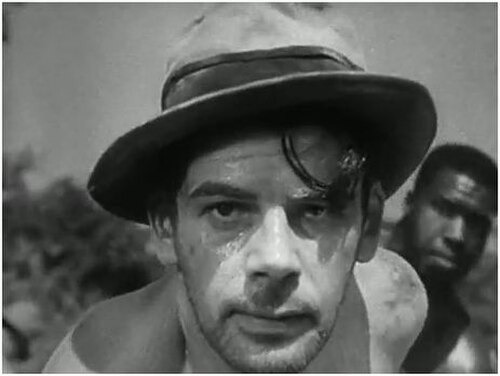
The most searing criticism of the American prison system was reserved for the depiction of Southern chain gangs, with I Am a Fugitive from a Chain Gang being by far the most influential and famous. The film is based on the true story of folk figure Robert E. Burns. In the first half of 1931, True Detective Mysteries magazine had published Burns's work over six issues, and the story was released as a book in January 1932. Decorated veteran James Allen (Paul Muni) returns from World War I a changed man and seeks an alternative to the tedious job that he had left behind, traveling the country looking for construction work. Allen follows a hobo, whom he had met at a homeless shelter, into a cafe, taking the hobo up on his offer of a free meal. When the hobo attempts to rob the eatery, Allen is charged as an accessory, convicted of stealing a few dollars and sentenced to ten years in a chain gang.
The men are chained together and transported to a quarry to break rocks every day. Even when unchained from each other, shackles remain around their ankles at all times. Allen convinces a large black prisoner who has particularly good aim to hit the shackles on his ankles with a sledgehammer to bend them. He removes his feet from the bent shackles, and in a famous sequence, escapes through the woods while being chased by bloodhounds. On the outside he develops a new identity and becomes a respected developer in Chicago. He is blackmailed into marriage by a woman he does not love who finds out his secret. When he threatens to leave her for a young woman with whom he has fallen in love, his wife turns him in. His case becomes a cause célèbre, and he agrees to surrender under the agreement that he will serve 90 days and then be released. However, he is tricked and is not freed after the agreed duration. This forces him to escape again, and he seeks out the young woman, telling her that they cannot be together because he will always be hunted. The film ends with her asking him how he survives, and his ominous reply from the darkness is: "I steal."
Although based on reality, the Chain Gang film changes the original story slightly to appeal to Depression-era audiences by depicting the country as struggling economically, even though Burns returned during the Roaring Twenties era. The film's bleak, anti-establishment ending shocked audiences.
Laughter in Hell, a 1933 film directed by Edward L. Cahn and starring Pat O'Brien, was inspired in part by I Am a Fugitive from a Chain Gang. O'Brien plays a railroad engineer who kills his wife and her lover in a jealous rage, and is sent to prison. The dead man's brother is the warden of the prison and torments O'Brien's character. O'Brien and several others revolt, killing the warden and escaping with his new lover (Gloria Stuart). The film, rediscovered in 2012, drew controversy for its lynching scene in which several black men were hanged, though reports vary as to whether the black men were hanged alongside white men or by themselves. A film critic from The New Age (an African American weekly newspaper) praised the filmmakers for being courageous enough to depict the atrocities that were occurring in some Southern states.
Sex films

Promotion
As films featuring prurient elements performed well at the box office, after the crackdown on crime films, Hollywood increased its production of pictures featuring the seven deadly sins. In 1932, Warner Bros formed an official policy decreeing that "two out of five stories should be hot", and that nearly all films could benefit by "adding something having to do with ginger". Filmmakers (including the shrewd Mae West) began putting in overly suggestive material they knew would never reach theaters in hopes that lesser offenses would survive the cutting-room floor. MGM screenwriter Donald Ogden Stewart said "[Joy and Wingate] wouldn't want to take out too much, so you would give them five things to take out to satisfy the Hays Office—and you would get away with murder with what they left in."
Films such as Laughing Sinners, The Devil's Holiday, Safe in Hell, The Devil is Driving, Merrily We Go to Hell, Laughter in Hell, and The Road to Ruin were provocative in their mere titles. Studios marketed their films, sometimes dishonestly, by inventing suggestive tag lines and lurid titles, even going so far as to hold in-house contests for thinking up provocative titles for screenplays. Commonly labeled "sex films" by the censors, these pictures offended taste in more categories than just sexuality. According to a Variety analysis of 440 pictures produced in 1932–33, 352 had "some sex slant", with 145 possessing "questionable sequences", and 44 being "critically sexual". Variety summarized that "over 80% of the world's chief picture output was ... flavored with bedroom essence." Attempts to create films for adults only (dubbed "pinking") wound up bringing large audiences of all ages to cinemas.

Posters and publicity photos were often tantalizing. Women appeared in poses and garb not even glimpsed in the films themselves. In some cases actresses with small parts in films (or in the case of Dolores Murray in her publicity still for The Common Law, no part at all) appeared scantily clad. Hays became outraged at the steamy photographs, drawings and prose circulating in newspapers around the country for publicity. The original Hays Code contained an often-ignored note about advertising imagery, but he wrote an entirely new advertising screed in the style of the Ten Commandments that contained a set of twelve prohibitions. The first seven addressed imagery. They prohibited women in undergarments, women raising their skirts, suggestive poses, kissing, necking, and other suggestive material. The last five concerned advertising copy and prohibited misrepresentation of the film's contents, "salacious copy", and the word "courtesan".
Studios found their way around the restrictions and published increasingly racy imagery. Ultimately this backfired in 1934 when a billboard in Philadelphia was placed outside the home of Cardinal Dennis Dougherty. Severely offended, Dougherty took his revenge by helping to launch the motion-picture boycott that would later facilitate enforcement of the Code. A commonly repeated theme by those supporting censorship, and one mentioned in the Code itself was the notion that the common people needed to be saved from themselves by the more refined cultural elite.
Despite the obvious attempts to appeal to red-blooded American males, most of the patrons of sex pictures were female. Variety squarely blamed women for the increase in vice pictures:
Women are responsible for the ever-increasing public taste in sensationalism and sexy stuff. Women who make up the bulk of the picture audiences are also the majority reader of the tabloids, scandal sheets, flashy magazines, and erotic books ... the mind of the average man seems wholesome in comparison. ... Women love dirt, nothing shocks 'em.
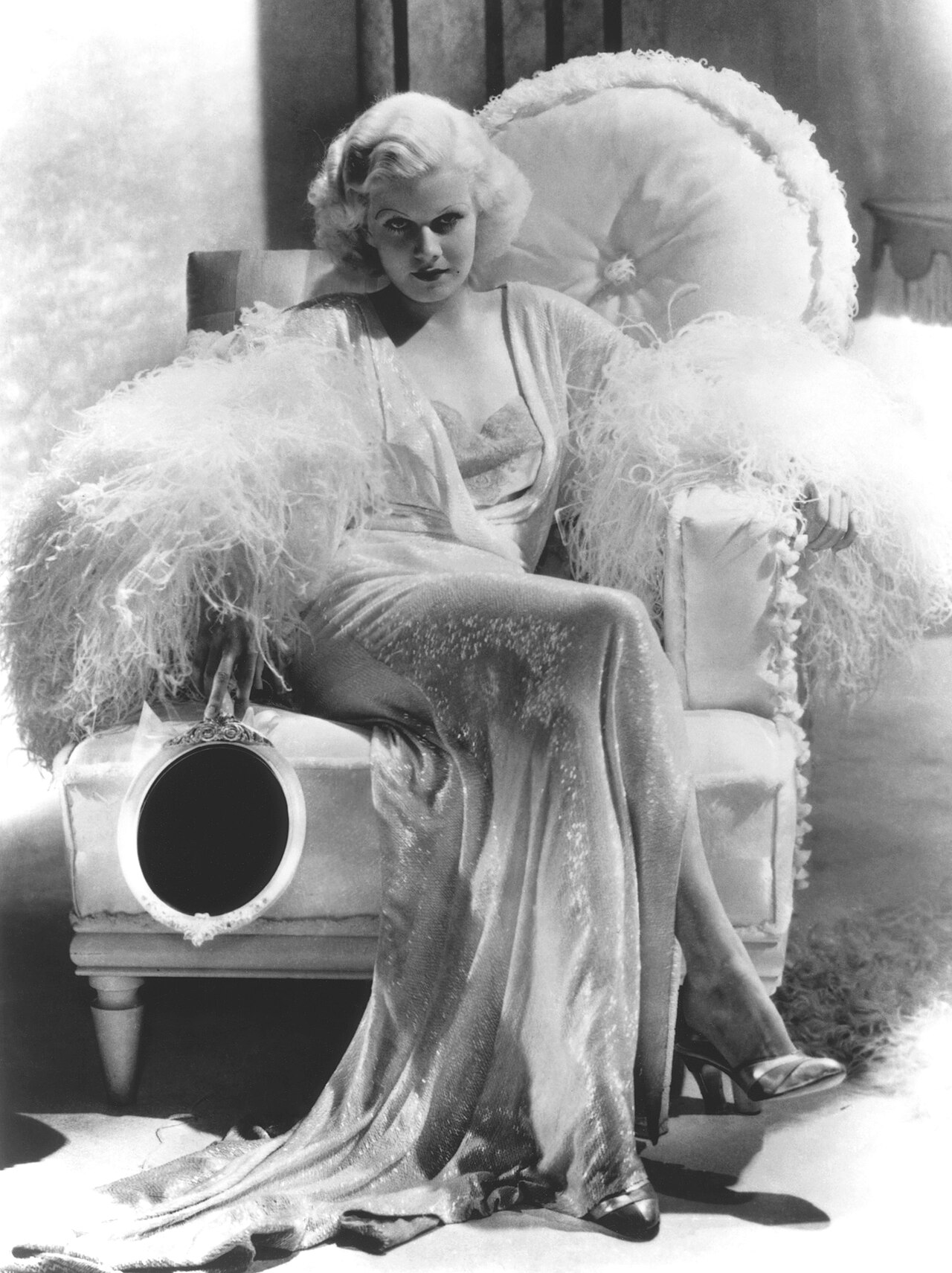
Pre-Code female audiences liked to indulge in the carnal lifestyles of mistresses and adulteresses while at the same time taking joy in their usually inevitable downfall in the closing scenes of the picture. While gangster films were claimed to corrupt the morals of young boys, vice films were blamed for threatening the purity of adolescent women.
Content
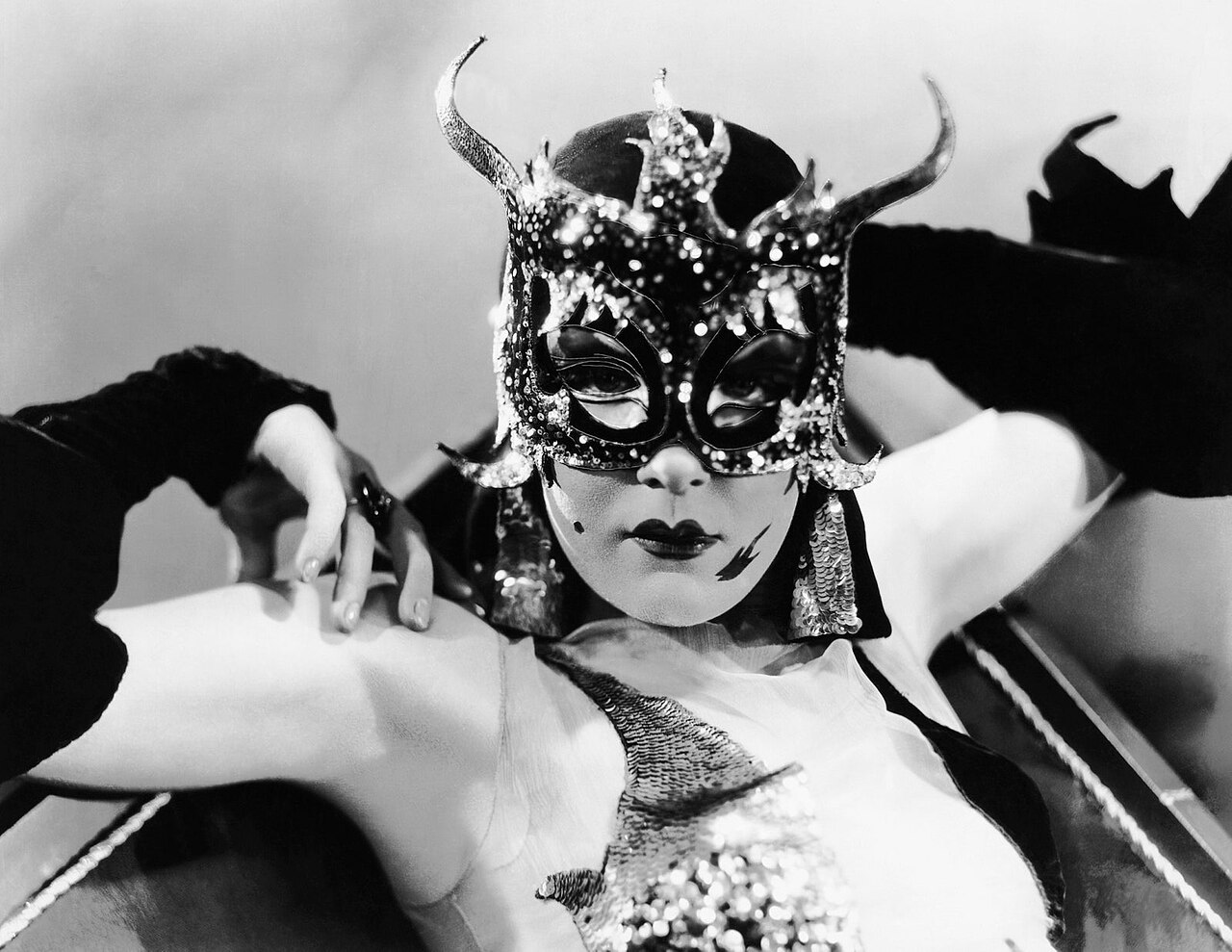
In pre-Code Hollywood, the sex film became synonymous with women's pictures—Darryl F. Zanuck once told Wingate that he was ordered by Warner Brothers' New York corporate office to reserve 20% of the studio's output for "women's pictures, which inevitably means sex pictures". Vice films typically tacked on endings where the most sin-filled characters were either punished or redeemed. Films explored Code-defying subjects in an unapologetic manner with the premise that an end-reel moment could redeem all that had gone before. The concept of marriage was often tested in films such as The Prodigal (1931), in which a woman is having an affair with a seedy character, and later falls in love with her brother-in-law. When her mother-in-law steps in at the end of the film, it is to encourage one son to grant his wife a divorce so she can marry his brother, with whom she is obviously in love. The older woman proclaims the message of the film in a line near the end: "This is the twentieth century. Go out into the world and get what happiness you can."
In Madame Satan (1930), adultery is explicitly condoned and used as a sign for a wife that she needs to act in a more enticing way to maintain her husband's interest. In Secrets (1933), a husband admits to serial adultery, only this time he repents and the marriage is saved. The films took aim at what was already a damaged institution. During the Great Depression, relations between spouses often deteriorated due to financial strain, marriages lessened, and husbands abandoned their families in increased numbers. Marriage rates continually declined in the early 1930s, finally rising in 1934, the final year of the pre-Code era, and although divorce rates lowered, this is likely because desertion became a more common method of separation. Consequently, female characters, such as Ruth Chatterton's in Female, live promiscuous bachelorette lifestyles, and control their own financial destiny (Chatterton supervises an auto factory) without regret.
In The Divorcee (1930), starring Norma Shearer, a wife discovers that her husband (played by Chester Morris) has been cheating on her. In reaction, she decides to have an affair with his best friend (played by Robert Montgomery). When the husband finds out, he decides to leave her. After pleading with him to stay, the wife unleashes her frustrations upon him, and, in a moment of inspiration, reveals her desire to live a fearless, sexually liberated life without him. According to film critic Mick LaSalle, this was the motion picture that inspired other films centering upon sophisticated female protagonists, who stayed out late, had affairs, wore revealing gowns, and who basically destroyed the sexual double standard by asserting themselves both within society and in the bedroom. From The Divorcee onward, there developed "a trend toward a sophistication in women's pictures that would continue unabated until the end of the Pre-Code era in mid-1934".
One of the most prominent examples of punishment for immoral transgressions in vice film can be seen in The Story of Temple Drake, based on the William Faulkner novel Sanctuary. In Drake, the title character (played by Miriam Hopkins), a cold, vapid "party girl", the daughter of a judge, is raped and forced into prostitution by a backwoods character, and according to pre-Code scholar Thomas Doherty, the film implies that the deeds done to her are in recompense for her immorality. Later, in court, she confesses that she killed the man who raped and kept her. She faints after this confession, upon which her lawyer carries her out, leading to a "happy ending". In the RKO film Christopher Strong, Katharine Hepburn plays an aviator who becomes pregnant from an affair with a married man. She commits suicide by flying her plane directly upwards until she breaks the world altitude record, at which point she takes off her oxygen mask and plummets to earth. Strong female characters often ended films as "reformed" women, after experiencing situations in which their progressive outlook proved faulty.

Female protagonists in aggressively sexual vice films were usually of two general kinds: the bad girl or the fallen woman. In so-called "bad girl pictures", female characters profited from promiscuity and immoral behavior. Jean Harlow, an actress who was by all reports a lighthearted, kind person offscreen, frequently played bad girl characters and dubbed them "sex vultures".
Two of the most prominent examples of bad girl films, Red-Headed Woman and Baby Face, featured Harlow and Stanwyck. In Red-Headed Woman, Harlow plays a secretary determined to sleep her way into a more luxurious lifestyle, and in Baby Face Stanwyck is an abused runaway determined to use sex to advance herself financially.
In Baby Face Stanwyck moves to New York and sleeps her way to the top of Gotham Trust. Her progress is illustrated in a recurring visual metaphor of the movie camera panning ever upward along the front of Gotham Trust's skyscraper. Men are driven mad with lust over her and they commit murder, attempt suicide, and are ruined financially for associating with her before she mends her ways in the final reel. Stanwyck's sole companion for the duration of the film is a black woman named Chico (Theresa Harris), whom she took with her when she ran away from home at age 14.
Red-Headed Woman begins with Harlow seducing her boss Bill LeGendre and intentionally breaking up his marriage. During her seductions, he tries to resist and slaps her, at which point she looks at him deliriously and says "Do it again. I like it! Do it again!" They eventually marry but Harlow seduces a wealthy aged industrialist who is in business with her husband so that she can move to New York. Although this plan succeeds, she is cast aside when she is discovered having an affair with her chauffeur, in essence cheating on her paramour. Harlow shoots LeGendre, nearly killing him. When she is last seen in the film, she is in France in the back seat of a limousine with an elderly wealthy gentleman being driven along by the same chauffeur. The film was a boon to Harlow's career and has been described as a "trash masterpiece".
Cinema classified as "fallen woman" films was often inspired by real-life hardships women endured in the early Depression era workplace. The men in power in these stories frequently sexually harassed the women working for them. Remaining employed often became a question of a woman's virtue. In She Had to Say Yes (1933), starring Loretta Young, a struggling department store offers dates with its female stenographers as an incentive to customers. Employees' Entrance was marketed with the tag line "See what out of work girls are up against these days." Joy complained in 1932 of another genre, the "kept woman" film, which presented adultery as an alternative to the tedium of an unhappy marriage.
Nudity was generally banned, but permitted if it was presented as documentary footage from other cultures. Filmmaker Deane Dickason took advantage of this loophole to release a documentary titled Virgins of Bali in September 1932, which concerns a day in the life of two Balinese teenagers who are topless in much of the footage. The film's introduction notes that Balinese women were normally topless and only covered their breasts for ceremonial duties; Doherty commented dryly that, "fortunately" for Dickason, his film's two "stars" rarely performed ceremonial duties. Typical of the film is the first scene where the two girls take a bath in the river while Dickason narrates, talking breathlessly about how the two girls "bathe their shamelessly nude bronze bodies". Virgins of Bali, which consisted almost entirely of scenes of Balinese women in various states of undress under the guise of showing what daily life in Bali was like, was a successful film with men at the time and contributed to make Bali into a popular tourist destination.
Homosexuals were portrayed in such pre-Code films as Our Betters (1933), Footlight Parade (1933), Only Yesterday (1933), Sailor's Luck (1933), and Cavalcade (1933). Although the topic was dealt with much more openly than in the decades that followed, the characterizations of gay and lesbian characters were usually derogatory. Gay male characters were portrayed as flighty with high voices, existing merely as buffoonish supporting characters.
A rare example of a homosexual character not being portrayed in the standard effeminate way, albeit still negatively, was the villain "Murder Legendre", played by Bela Lugosi in White Zombie (1932), the Frenchman who mastered the magical powers of a Bokor (voodoo sorcerer). Legendre is hired by a wealthy plantation owner Charles Beaumont (Robert Frazer) to turn the woman he desires into a zombie, only to be informed later that Legendre desires him and is going to transform him into a zombie. In films like Ladies They Talk About, lesbians were portrayed as rough, burly characters, but in DeMille's The Sign of the Cross, a female Christian slave is brought to a Roman prefect and seduced in dance by a statuesque lesbian dancer. Fox nearly became the first American studio to use the word "gay" to refer to homosexuality, but the SRC made the studio muffle the word in the soundtrack of all footage that reached theaters.
.jpg/1280px-West,_Mae_(Go_West_Young_Man).jpg)
Bisexual actress Marlene Dietrich cultivated a cross-gender fan base and started a trend when she began wearing men's suits. She caused a commotion when she appeared at the premiere of The Sign of the Cross in 1932 in a tuxedo, complete with top hat and cane. The appearance of homosexual characters was at its height in 1933; in that year, Hays declared that all gay male characters would be removed from pictures. Paramount took advantage of the negative publicity Dietrich generated by signing a largely meaningless agreement stating that they would not portray women in male attire.
Comedy films
In the harsh economic times of the early Depression, films and performers often featured an alienated, cynical, and socially dangerous comic style. As with political films, comedy softened with the election of FDR and the optimism of the New Deal. Characters in the pre-Code era frequently engaged in comedic duels of escalating sexual innuendo. In Employee's Entrance, a woman enters the office of a scoundrel boss who remarks, "Oh, it's you—I didn't recognize you with all your clothes on." Racial stereotypes were usually employed when ethnic characters appeared. Black people in particular were usually the butt of the wisecrack, never the wisecracker. The most acknowledged black comedian was Stepin Fetchit, whose slow-witted comedic character was only meant to be successful in an unintentional manner, with himself as the punchline.
The New York stage was filled with ribald humor and sexually offensive comedy; when movie producers started to put wisecracks in their sound pictures, they sought New York performers. Popular comics such as the Marx Brothers got their start on Broadway in front of live audiences. Censors complained when they had to keep up with the deluge of jokes in pictures in the early 1930s, some of which were designed to go over their heads. The comic banter of some early sound films was rapid-fire, non-stop, and frequently exhausting for the audience by the final reel.
Mae West had already established herself as a comedic performer when her 1926 Broadway show Sex made national headlines. Tried and convicted of indecency by the New York City District Attorney, she served eight days in prison. West carefully constructed a stage persona and carried it over into her interviews and personal appearances. Despite her voluptuous physique, most of her appeal lay in her suggestive manner. She became a wordsmith in the art of the come-on and the seductive line, and despite her obvious appeal to male audiences, was popular with women as well. Over the cries of the censors, West got her start in the film Night After Night (1932), which starred George Raft and Constance Cummings, as a Texas Guinan-esque supporting character. She agreed to appear in the film only after producers agreed to let her write her own lines. In West's first line on film, after a hat check girl remarks "Goodness, what beautiful diamonds", West replies, "Goodness had nothing to do with it, dearie." Raft, who had wanted Texas Guinan herself for the role that went to West, later wrote, "In this picture, Mae West stole everything but the cameras." She went on to make She Done Him Wrong in 1933, which became a huge box office hit, grossing $3 million against a $200,000 budget, and then nine months later wrote and starred in I'm No Angel. She became such a success that her career saved Paramount from financial ruin.
The arrival of sound film created a new job market for writers of screen dialogue. Many newspaper journalists moved to California and became studio-employed screenwriters. This resulted in a series of fast-talking comedy movies featuring newsmen. The Front Page, later re-made as the much less cynical and more sentimental post-Code His Girl Friday (1940), was adapted from the Broadway play by Chicago newsmen, and Hollywood screenwriters, Ben Hecht and Charles MacArthur. It was based on Hecht's experiences working as a reporter for the Chicago Daily Journal.
Cartoons

Theatrical cartoons were also covered by the Production Code. According to Leonard Maltin: "In early 1933 a Georgia theater owner wrote to Film Daily: 'The worst kicks we have are on smut in cartoons. They are primarily a kid draw, and parents frequently object to the filth that is put in them, incidentally without helping the comedy. The dirtiest ones are invariably the least funny.'" Betty Boop thus underwent some of the most dramatic changes after the Code was imposed: "gone was the garter, the short skirt, the décolletage".
Musical films
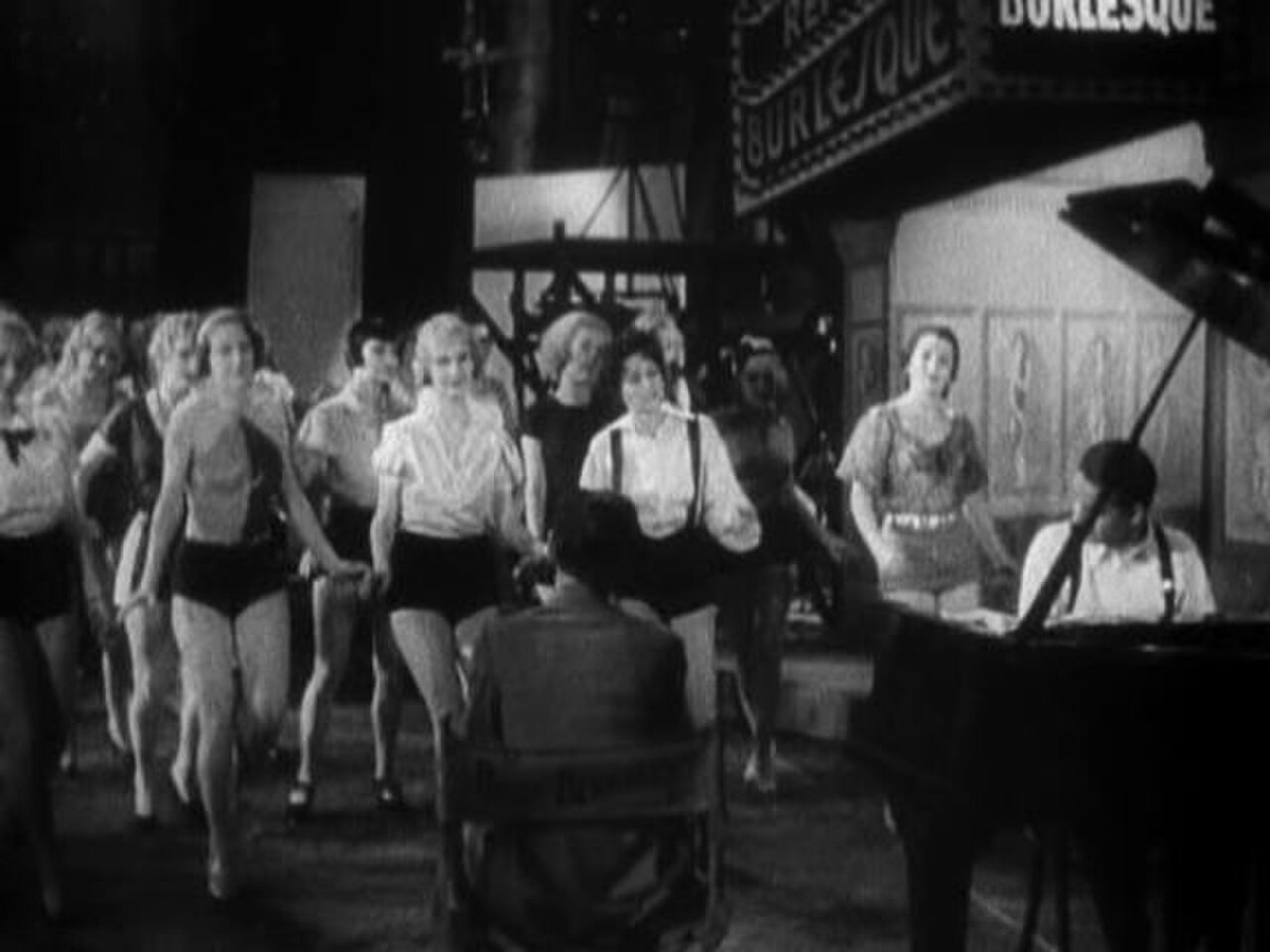
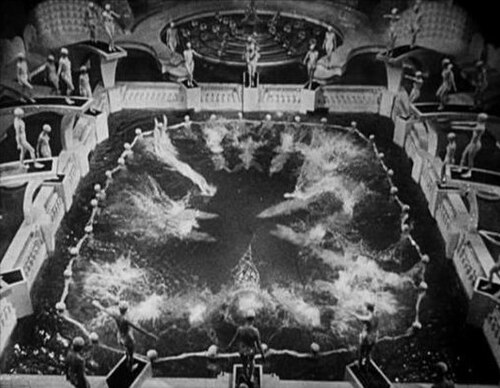
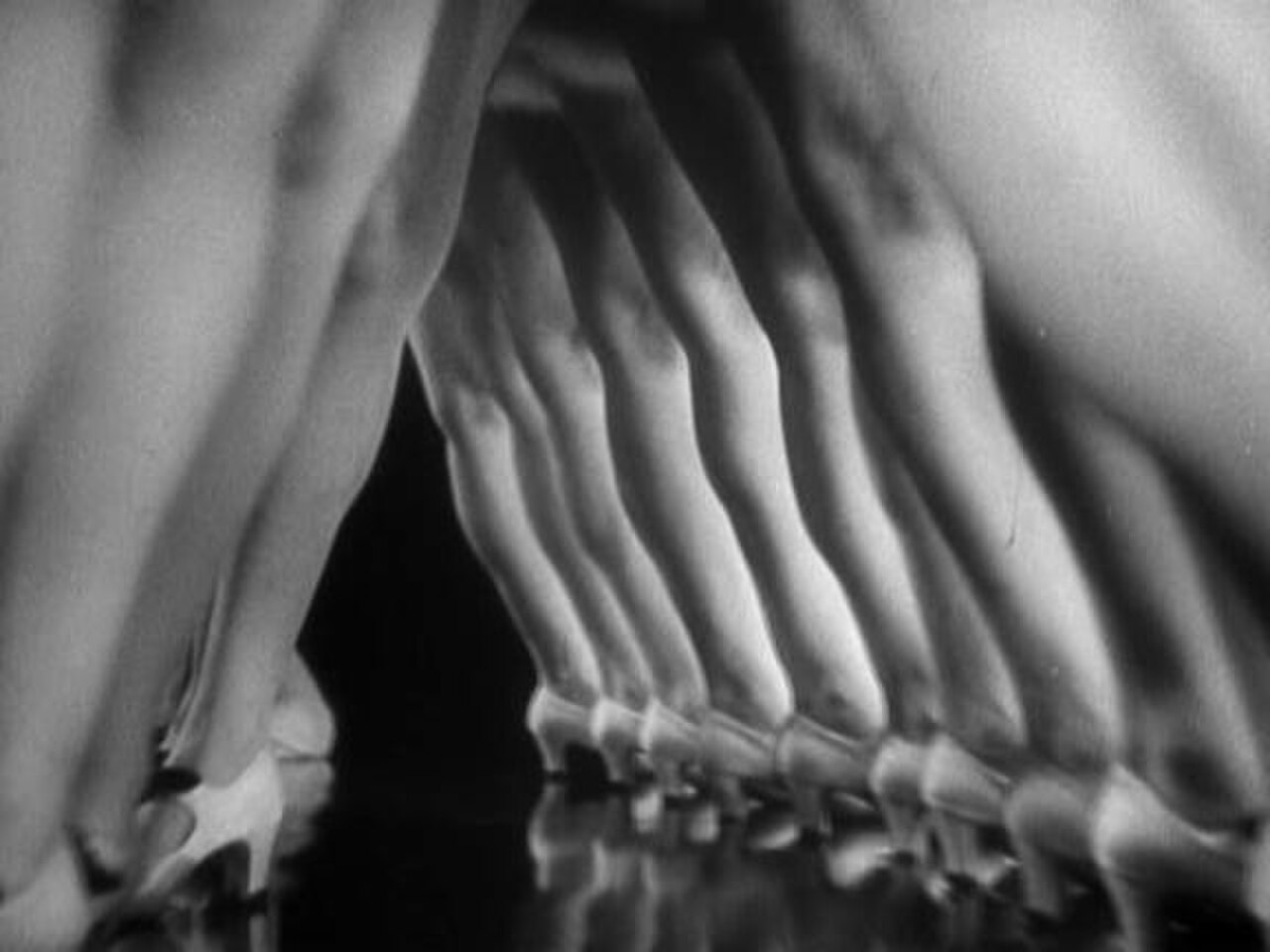
As sound-pictures became the norm in Hollywood, the "backstage" film musical was a natural subject for the new medium. Not only could the studios present singing and dancing to their audiences – many of whom were unlikely to have ever seen a stage musical before – but the pre-Code film musicals also tended to feature shapely young female chorus "girls" wearing skimpy rehearsal clothing that revealed parts of the body that were still not normal to see on the street, and hinted at other parts in a way that normal fashion did not allow. But even if this could be considered exploitative use of the female body, the pre-Code movie musicals were generally not derogatory in their presentation of the physical virtues of their women, but celebratory, with Busby Berkeley's spectacular musical numbers being especially, and wittily, so; Berkeley avoided fetishizing his female performers.
Chorus "boys", too, were generally well built, healthy-looking, virile specimens, but even so they never got nearly the attention that the women did. Along with the obvious displays of male and female sexual potential, and the flirting and courting that went with it, pre-Code musicals feature the energy and vitality of their youthful performers, as well as the comedic abilities of the many older character actors in Hollywood, who were often cast as producers, agents, Broadway "angels" (financial backers) and stingy rich relatives, and brought a light – if often stereotypical – touch to these films.
Some Pre-Code musicals
Horror and science fiction films
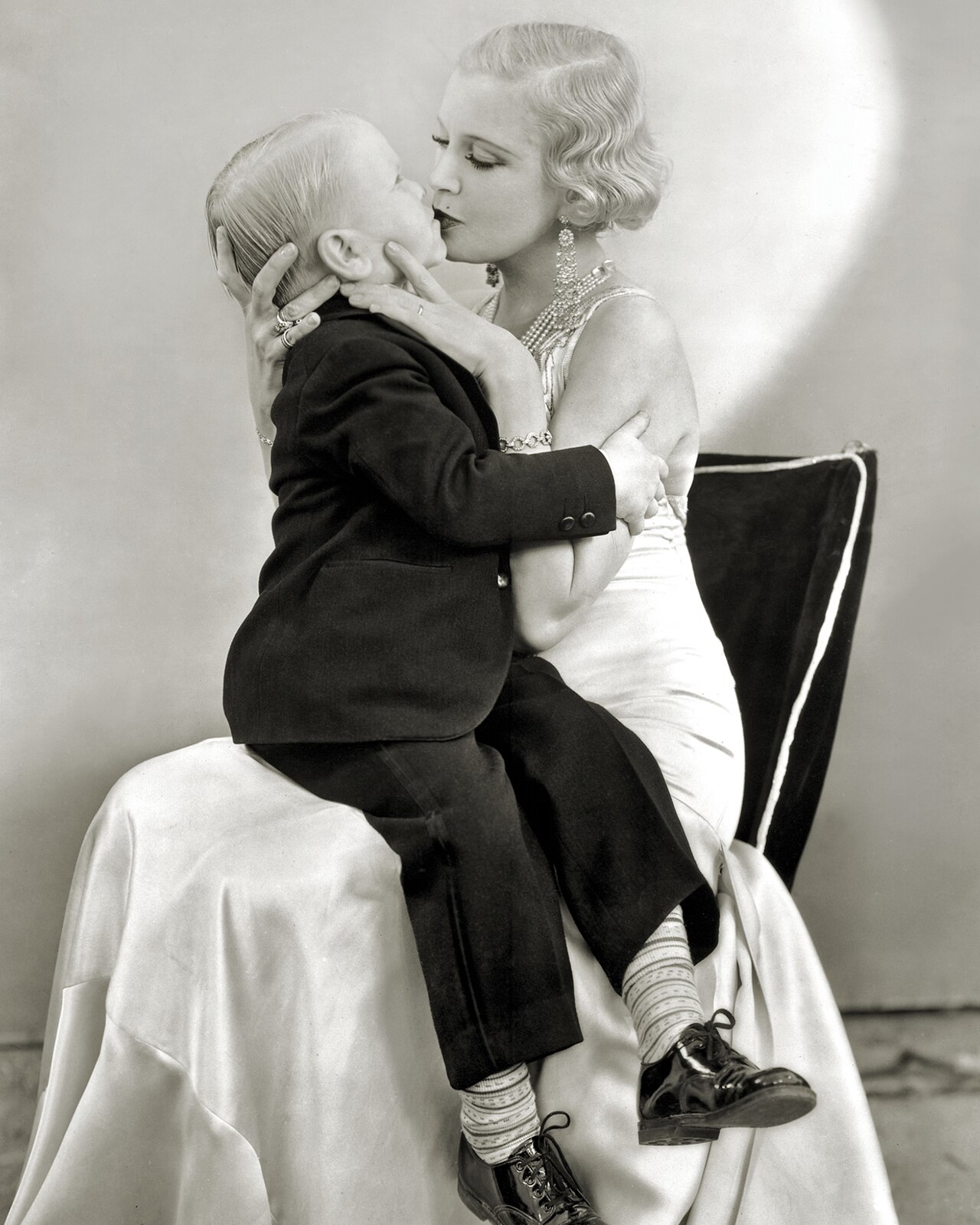
Unlike silent-era sex and crime films, silent horror movies, despite being produced in the hundreds, were never a major concern for censors or civic leaders. When sound horror films were released, however, they quickly caused controversy. Sound provided "atmospheric music and sound effects, creepy-voiced macabre dialogue and a liberal dose of blood-curdling screams", which intensified its effects on audiences, and consequently on moral crusaders. The Hays Code did not mention gruesomeness, and filmmakers took advantage of this oversight. However, state boards usually had no set guidelines and could object to any material they found indecent. Although films such as Frankenstein and Freaks caused controversy when they were released, they had already been re-cut to comply with censors.
.jpg/1280px-Frankenstein's_monster_(Boris_Karloff).jpg)
Comprising the nascent motion picture genres of horror and science fiction, the "nightmare picture" provoked individual psychological terror in its horror incarnations, while embodying group sociological terror in its science fiction manifestations. The two main types of pre-Code horror movies were the single monster movie, and films where masses of hideous beasts rose up and attacked their putative betters. Frankenstein and Freaks exemplified both genres.
The pre-Code horror cycle was motivated by financial necessity. Universal in particular buoyed itself with the production of horror hits such as Dracula (1931) and Frankenstein, then followed those successes up with Murders in the Rue Morgue (1932), The Mummy (1932), and The Old Dark House (1932). Other major studios responded with their own productions. Much like the crime film cycle, however, the intense boom of the horror cycle was ephemeral, and had fallen off at the box office by the end of the pre-Code era.
While Joy declared Dracula "quite satisfactory from the standpoint of the Code" before it was released, and the film had little trouble reaching theaters, Frankenstein was a different story. New York, Pennsylvania, and Massachusetts removed the scene where the monster unintentionally drowns a little girl and lines that referenced Dr. Frankenstein's God complex. Kansas, in particular, objected to the film. The state's censor board requested the cutting of 32 scenes, which if removed, would have halved the length of the film.
Paramount's Dr. Jekyll and Mr. Hyde (1931) played to the Freudian theories popular with the audience of its time. Fredric March played the split-personality title character. Jekyll represented the composed super-ego, and Hyde the lecherous id. Miriam Hopkins's coquettish bar singer, Ivy Pierson, sexually teases Jekyll early in the film by displaying parts of her legs and bosom. Joy felt the scene had been "dragged in simply to titillate the audience". Hyde coerces her with the threat of violence into becoming his paramour and beats her when she attempts to stop seeing him. She is contrasted with his wholesome fiancée Muriel (Rose Hobart), whose chaste nature dissatisfies March's baser alter ego. The film is considered the "most honored of the Pre-Code horror films". Many of the graphic scenes between Hyde and Ivy were cut by local censors because of their suggestiveness. Sex was intimately tied to horror in many pre-Code horror movies. In Murders in the Rue Morgue, an adaptation of Edgar Allan Poe's classic tale that has little in common with the source material, Bela Lugosi plays a mad scientist who tortures and kills women, trying to mix human blood with ape blood during his experiments. His prized experiment, an intelligent ape named Erik, breaks into a woman's second-floor apartment window and rapes her.
In Freaks, director Tod Browning of Dracula fame helms a film that depicts a traveling circus populated by a group of carnival "freaks". Browning cast actual carnival sideshow performers, including people with dwarfism, an intersex person, conjoined twins, and "the armless and legless man billed as the 'living torso'". Although circus freak shows were common in the early 1930s, the film was their first depiction on screen. The film includes scenes of the disabled characters performing mundane tasks, including one of the "living torso" lighting a match and then a cigarette with his mouth. The film was accompanied by a sensational marketing campaign that asked sexually suggestive questions such as "Do the Siamese Twins make love?", "What sex is the half-man half-woman?", and "Can a full grown woman truly love a midget?" In response to negative test screenings, studio Metro-Goldwyn-Mayer cut the film from its original 90 minutes runtime to just over one hour. Surprisingly, given its reaction to Frankenstein, the state of Kansas objected to nothing in Freaks. However, other states, such as Georgia, were repulsed by the film and it was not shown in many locales. The film later became a cult classic spurred by midnight movie showings, but it was a box-office bomb in its original release.
In Island of Lost Souls (1932), an adaptation of H. G. Wells' science-fiction novel The Island of Doctor Moreau, Charles Laughton plays yet another mad scientist with a God complex. As Moreau, Laughton creates a mad scientist's island paradise, an unmonitored haven where he is free to create a race of man-beasts and Lota, a beast-woman he wants to mate with a normal human male. A castaway lands on his island, providing him an opportunity to see how far his science experiment, the barely clothed, attractive Lota, has come. The castaway discovers Moreau vivisecting one of the beast-men and attempts to leave the island. He runs into the camp of the man-beasts and Moreau beats them back with a whip. The film ends with Lota dead, the castaway rescued, and the man-beasts chanting, "Are we not men?" as they attack and then vivisect Moreau. The film has been described as "a rich man's Freaks" due to its esteemed source material. Wells, however, despised the movie for its lurid excesses. It was rejected by 14 local censor boards in the United States, and considered "against nature" in Great Britain, where it was banned until 1958.
Exotic adventure films
_2.jpg/1280px-Bird_of_Paradise_(1932)_2.jpg)
In the early 1930s, the studios made a series of films that aimed to provide viewers a sense of the exotic, an exploration of the unknown and the forbidden. Films such as Africa Speaks were directly marketed by referencing interracial sex; moviegoers received small packets labeled "Secrets", which contained pictures of naked black women. As portrayals of historic conditions, these movies are of little educational value, but as artifacts that show Hollywood's attitude towards race and foreign cultures, they are enlightening. The lack of black characters in films highlights their status in Jim Crow America.
The central point of interest in The Blonde Captive (1931), a film that depicted a blonde woman abducted by a savage tribe of Aboriginal Australians, was not that she was kidnapped, but that she enjoys living among the tribe. In Bird of Paradise (1932), a White American man (Joel McCrea) enjoys a torrid affair with a Polynesian princess (Dolores del Río). The film created a scandal when released due to a scene featuring del Río swimming naked. Orson Welles said del Río represented the highest erotic ideal with her performance in the film.
The white protagonist in Tarzan, the Ape Man (1932) is the "King of the [African] Jungle". Tarzan (Johnny Weissmuller) is a monosyllabic half-naked jungle creature whose attractiveness is derived from his physical prowess; throughout the movie, he saves Jane (Maureen O'Sullivan) from danger and she swoons in his arms. When Jane's father warns her "[h]e's not like us", she responds, "[h]e's white" as evidence to the contrary. In the racy 1934 sequel, Tarzan and His Mate (the last word meaning both a status and a biological function), men come from the U.S. with fancy gowns and other accoutrements to woo and clothe the bra-less, barely clothed Jane, again played by O'Sullivan, hoping to lure her away from the savage Tarzan. He detests the fancier clothing and tears it off. The film included a skinny-dipping scene with extensive nudity with a body double standing in for O'Sullivan. Breen, then head of the SRC, objected to the scene, and MGM, the movie's producer, decided to take their case to the appeals review board. The board consisted of the heads of Fox, RKO, and Universal. After watching the scene "several times", the board sided with Breen and the MPPDA, and the scene was removed, but MGM still allowed some uncut trailers and a few reels to stay in circulation. MGM marketed the film primarily towards women using taglines such as:
Girls! Would you live like Eve if you found the right Adam?
Modern marriages could learn plenty from this drama of primitive jungle mating!
If all marriages were based on the primitive mating instinct, it would be a better world.
_trailer_1.jpg/1280px-Tarzan_and_His_Mate_(1934)_trailer_1.jpg)
Non-White characters were portrayed against stereotype in Massacre (1934). The protagonist (Richard Barthelmess) is a Native American who performs in a Wild West Show in full Indian garb, but then slips into a suit and speaks in American slang once the show is over. He has a black butler who is atypically intelligent; his character merely plays dumb by slipping into a stereotypical slow-witted "negro" character when it suits him, rather than being genuinely unintelligent.
Films such as The Mask of Fu Manchu (1932), Shanghai Express (1932) and The Bitter Tea of General Yen (1933), explored the exoticism of the Far East—by using white actors, not Asians, in the lead roles. The white actors frequently looked absurd in yellow-face makeup next to genuine Asians, so the studios would cast all the Asian parts white. Generally, "Yellow Peril" stereotypes dominated the portrayal of Asian characters, who were almost always villains. The American scholar Huang Yunte wrote that the character of Charlie Chan, a Chinese American detective aided by his bumbling, Americanized "Number One Son" were virtually the only positive examples of Asian characters in Hollywood in this period. The actress Anna May Wong complained in a 1933 interview about the prevalence of "Yellow Peril" stereotypes in Hollywood saying: "Why is it that the screen Chinese is always the villain? And so crude a villain – murderous, treacherous, a snake in the grass! We are not like that. How could we be, with a civilization that is so many times older than the West?"
In Fu Manchu, Boris Karloff plays the evil Chinese mad scientist and gangster Dr. Fu Manchu, who wants to find the sword and mask of Genghis Khan, which will give him the power to control the "countless hordes" of Asians, and lead them into battle against the West. Fu is a sexual deviant who engages in ritual torture and has occult powers. Several times, the film seems to suggest Fu is engaged in an incestuous relationship with his equally evil daughter Fah Lo See (Myrna Loy), which plays up a central theme of the "Yellow Peril" fears, the alleged abnormal sexuality of Asians. In a scene cut from the film due to its depiction of miscegenation, the film shows Fu's depraved daughter violating one of the chaste good characters. Fu is eventually conquered, but not before he temporarily lays his hand on the sword and proclaims to a vast Pan-Asian army made up of Asians and Muslims: "Would you have maidens like this [referring to Karen Morley] for your wives? Then conquer and breed! Kill the white man and take his women!"
_by_Don_English.png/1280px-Marlene_Dietrich_in_Shanghai_Express_(1932)_by_Don_English.png)
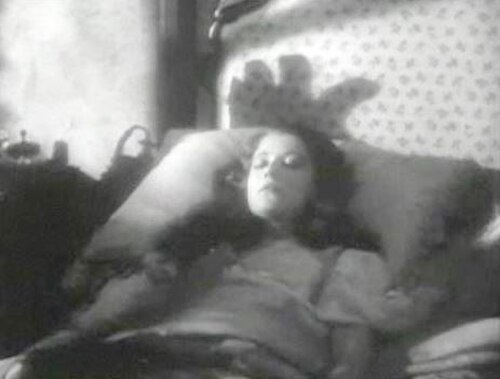
In Frank Capra's The Bitter Tea of General Yen, Stanwyck plays a missionary who goes to civil-war-torn China and meets the titular general (played by Nils Asther) after his car kills the driver of her rickshaw. When she is knocked unconscious in a riot, he takes her out of the rabble and onto a train car. She has lurid, horror-themed, symbolic dreams about the General, in which she is both titillated and repulsed by him. The film breaks precedent by developing into an interracial love story, but his army ends in ruins. Yen kills himself at the film's conclusion—by drinking poisoned tea—rather than be captured and killed. Capra adored the script and disregarded the risk of making a film that broke California's (and 29 other states') laws concerning the portrayal of miscegenation. Cinematographer Joseph Walker tested a new technique he created, which he dubbed "Variable Diffusion", in filming the movie. This rendered the entire film in very soft focus.
Documentary films
From 1904 until 1967, when television finally killed them off, newsreels preceded films. In the early sound-film era, they lasted around eight minutes and featured highlights and clips of the world's biggest stories. Updated twice a week by the five major studios, they became a highly profitable enterprise: in 1933, newsreels had a total box office take of almost $19.5 million against an outlay of under $10 million. The sound-film era created the narrator; among the first was Graham McNamee, who provided voiceover during the clips, often delivering hackneyed jokes while delineating the on-screen action. Sound newsreel interviews and monologs featured famous subjects unaccustomed to the new medium. These clips changed public perception of important historical figures depending on their elocution, the sound of their previously unheard voices, and their composure in front of the camera. Around 12 "newsreel theaters" were soon created around the United States, the most successful being the Embassy Newsreel Theater on Broadway. The Embassy was a 578-seat facility that presented fourteen 45–50 minute programs a day, running from 10 in the morning until midnight. It was noted for its discerning, intellectual audience, many of whom did not attend motion-picture theaters.

The most gripping news story of the pre-Code era was the kidnapping of the Lindbergh baby on the evening of March 1, 1932. As the child was already enormously famous before the kidnapping, the event created a media circus, with news coverage more intense than anything since World War I. Newsreels featuring family photos of the child (the first time private pictures had been "conscripted for public service") asked spectators to report any sight of him. On May 12, 1932, the child's body was found less than five miles from the Lindbergh home. Although newsreels covered the most important topics of the day, they also presented human-interest stories (such as the immensely popular coverage of the Dionne quintuplets) and entertainment news, at times in greater detail than more pressing political and social matters.
Some of the images' impact belies their historical accuracy; nearly all ceremonies and public events that were filmed for newsreels in the early sound era were staged, and in some cases even reenacted. For instance: when FDR signed an important bill, a member of his cabinet was called away before the staged reenactment began, so the film shows him absent at the time of the signing, although he had been present. The newsreels of FDR were staged to hide his hobbled gait caused by polio. Caught between the desire to present accurate hard-hitting news stories and the need to keep an audience in the mood for the upcoming entertainment, newsreels often soft-pedaled the difficulties Americans faced during the early years of the Great Depression. FDR in particular received favorable treatment from Hollywood, with all five of the major studios producing pro-FDR shorts by late 1933. These shorts featured some of the studios' lesser contract talent extolling the virtues of FDR created government and social programs. Roosevelt himself was a natural before the camera. The newsreels were instrumental to the success of his initial campaign, and his enduring popularity while in office. He was described by Variety as the "Barrymore of the Capital".
Taking advantage of 30 years of archived newsreels were filmmakers making early sound-era documentaries. World War I was a popular topic of these films and was the subject of numerous documentaries including The Big Drive (1933), World in Revolt (1933), This is America (1933), Hell's Holiday (1933), and the presciently titled The First World War (1934) – the most critically and commercially successful documentary of the era.
Filmmakers also made feature-length documentaries that covered the dark recesses of the globe, including the Amazon rainforest, Native American settlements, the Pacific Islands, and everywhere in between. Taking advantage of audiences' voyeuristic impulses, aided by the allowance of nudity in tribal documentaries, the filming of lands untouched by modernity, and the presentation of locales never before filmed, these movies placated Depression era American audiences by showing them lifestyles more difficult than their own. Also captured were polar expeditions in films such as 90° South and With Byrd at the South Pole, and sub-Saharan Africa in the safari films of Martin and Osa Johnson, among others.
Some exploitation style documentaries purported to show actual events but were instead staged, elaborate ruses. The most prominent of these was Ingagi (1931), a film that claimed to show a ritual where African women were given over to gorillas as sex slaves, but instead was mostly filmed in Los Angeles using local blacks in place of natives. Douglas Fairbanks mocked the phoniness of many pre-Code documentaries in his parody Around the World in 80 Minutes with Douglas Fairbanks, in one scene of which he filmed himself wrestling a stuffed tiger doll, then a tiger-skin rug. Opposing these films was the travelogue, which was shown before features and served as a short saccharine form of cinematic tourism.
Beginning of Code era (July 1, 1934)
The Code enumerated a number of key points known as the "Don'ts" and "Be Carefuls":
Resolved, That those things which are included in the following list shall not appear in pictures produced by the members of this Association, irrespective of the manner in which they are treated:
- Pointed profanity – by either title or lip – this includes the words "God", "Lord", "Jesus", "Christ" (unless they be used reverently in connection with proper religious ceremonies), "hell", "damn", "Gawd", and every other profane and vulgar expression however it may be spelled;
- Any licentious or suggestive nudity – in fact or in silhouette; and any lecherous or licentious notice thereof by other characters in the picture;
- The illegal traffic in drugs;
- Any inference of sex perversion;
- White slavery;
- Miscegenation (sex relationships between people of different races);
- Sex hygiene and venereal diseases;
- Scenes of actual childbirth – in fact or in silhouette;
- Children's sex organs;
- Ridicule of the clergy;
- Willful offense to any nation, race or creed;
And be it further resolved, That special care be exercised in the manner in which the following subjects are treated, to the end that vulgarity and suggestiveness may be eliminated and that good taste may be emphasized:
- The use of the flag;
- International relations (avoiding picturizing in an unfavorable light another country's religion, history, institutions, prominent people, and citizenry);
- Arson;
- The use of firearms;
- Theft, robbery, safe-cracking, and dynamiting of trains, mines, buildings, etc. (having in mind the effect which a too-detailed description of these may have upon the moron);
- Brutality and possible gruesomeness;
- Technique of committing murder by whatever method;
- Methods of smuggling;
- Third-degree methods;
- Actual hangings or electrocutions as legal punishment for crime;
- Sympathy for criminals;
- Attitude toward public characters and institutions;
- Sedition;
- Apparent cruelty to children and animals;
- Branding of people or animals;
- The sale of women, or of a woman selling her virtue;
- Rape or attempted rape;
- First-night scenes;
- Man and woman in bed together;
- Deliberate seduction of girls;
- The institution of marriage;
- Surgical operations;
- The use of drugs;
- Titles or scenes having to do with law enforcement or law-enforcing officers;
- Excessive or lustful kissing, particularly when one character or the other is a "heavy".
Pre-Code films began to draw the ire of various religious groups, some Protestant but mostly a contingent of Roman Catholic crusaders. Amleto Giovanni Cicognani, apostolic delegate to the Catholic Church in the United States, called upon Roman Catholics in the United States to unite against the surging immorality of films. As a result, in 1933, the Catholic Legion of Decency, headed by the Reverend John T. McNicholas (later renamed the National Legion of Decency), was established to control and enforce decency standards and boycott films they deemed offensive. They created a rating system for films that started at "harmless" and ended at "condemned", with the latter denoting a film that was a sin to watch.
I wish to join the Legion of Decency, which condemns vile and unwholesome moving pictures. I unite with all who protest against them as a grave menace to youth, to home life, to country and to religion. I condemn absolutely those salacious motion pictures which, with other degrading agencies, are corrupting public morals and promoting a sex mania in our land ... Considering these evils, I hereby promise to remain away from all motion pictures except those which do not offend decency and Christian morality.
— Catholic Legion of Decency Pledge
The Legion spurred several million Roman Catholics across the U.S. to sign up for the boycott, allowing local religious leaders to determine which films to protest.
Conservative Protestants tended to support much of the crackdown, particularly in the South, where anything relating to the state of race relations or miscegenation could not be portrayed. Although the Central Conference of American Rabbis joined in the protest, it was an uneasy alliance given the heavy presence of Jewish studio executives and producers, which, it was felt, had inspired at least some of the vitriol from the Catholic groups.
Hays opposed direct censorship, considering it "Un-American". He had stated that although there were some tasteless films in his estimation, working with filmmakers was better than direct oversight, and that, overall, films were not harmful to children. Hays blamed some of the more prurient films on the difficult economic times, which exerted "tremendous commercial pressure" on the studios more than a flouting of the code. Catholic groups became enraged with Hays and as early as July 1934 were demanding that he resign from his position, which he did not, although his influence waned and Breen took control, with Hays becoming a functionary.

The Payne Study and Experiment Fund was created in 1927 by Frances Payne Bolton to support a study of the influence of fiction on children. The Payne Fund Studies, a series of eight books published from 1933 to 1935 that detailed five years of research aimed specifically at the cinema's effects on children, were also gaining publicity at this time, and became a great concern to Hays. Hays had said certain films might alter "... that sacred thing, the mind of a child ... that clean, virgin thing, that unmarked state" and have "the same responsibility, the same care about the thing put on it that the best clergyman or the most inspired teacher would have". Despite its initial reception, the main findings of the study were largely innocuous. It found that cinema's effect on individuals varied with age and social position, and that films reinforced audiences' existing beliefs. The Motion Picture Research Council (MPRC, led by honorary vice president Sara Delano Roosevelt (mother of President Franklin D. Roosevelt), and executive director the Rev. William H. Short) which funded the study, was not pleased. An "alarmist summary" of the study's results written by Henry James Forman appeared in McCall's, a leading women's magazine of the time, and Forman's book, Our Movie Made Children, which became a bestseller, publicized the Payne Fund's results, emphasizing its more negative aspects.
The social environment created by the publicity of the Payne Fund Studies and religious protests reached such a fever pitch that a member of the Hays Office described it as a "state of war". However, newspapers including The Plain Dealer (Cleveland), New Orleans Times Picayune, Chicago Daily News, Atlanta Journal, Saint Paul Dispatch, the Philadelphia Record and Public Ledger, the Boston American and New York's Daily News, Daily Mirror, and Evening Post all lambasted the studies. When discussing the Supreme Court's 1915 decision, film historian Gregory Black argues that the efforts of reformers might have been lessened had "filmmakers been willing to produce films for specialized audiences (adults only, family, no children) ... but the movers and shakers of the industry wanted or needed the largest possible market." The most provocative films were the most profitable, with the 25% of the motion picture industry's output that was the most sensational supporting the cleaner 75%.
By 1932, there was an increasing movement for government control. By mid-1934, when Cardinal Dougherty of Philadelphia called for a Catholic boycott of all films, and Raymond Cannon was privately preparing a congressional bill supported by both Democrats and Republicans that would introduce Government oversight, the studios decided they had had enough. They re-organized the enforcement procedures giving Hays and the recently appointed Joseph I. Breen, a devout Roman Catholic, head of the new Production Code Administration (PCA), greater control over censorship. The studios agreed to disband their appeals committee and to impose a $25,000 fine for producing, distributing, or exhibiting any film without PCA approval. Hays had originally hired Breen, who had worked in public relations, in 1930 to handle Production Code publicity, and the latter was popular among Catholics. Joy began working solely for Fox Studios, and Wingate had been bypassed in favor of Breen in December 1933. Hays became a functionary, while Breen handled the business of censoring films.
Breen initially had anti-Semitic prejudices, and was quoted as stating that Jews "are, probably, the scum of the earth". When Breen died in 1965, the trade magazine Variety stated, "More than any single individual, he shaped the moral stature of the American motion picture." Although the Legion's impact on the more effective enforcement of the Code is unquestionable, its influence on the general populace is harder to gauge. A study done by Hays after the Code was finally fully implemented found that audiences were doing the exact opposite of what the Legion had recommended. Each time the Legion protested a film it meant increased ticket sales; unsurprisingly, Hays kept these results to himself and they were not revealed until many years later. In contrast to big cities, boycotts in smaller towns were more effective and theater owners complained of the harassment they received when they exhibited salacious films.
Many actors and actresses, such as Edward G. Robinson, Barbara Stanwyck, and Clark Gable, continued their careers apace after the Code was enforced. However, others, such as Ruth Chatterton (who decamped to England around 1936) and Warren William (who died relatively young in the 1940s), who excelled during this period, are mostly forgotten today.
Effects of the Code

Censors like Martin Quigley and Joseph Breen understood that a private industry code is more effective than government censorship. Private censorship can be more sweeping in its demands, because it is not bound by constitutional due process or freedom of expression rules.
Termed by Breen as "Compensating moral value", the maxim was that "any theme must contain at least sufficient good in the story to compensate for, and to counteract, any evil which relates." Hollywood could present evil behavior, but only if it were eradicated by the end of the film, "with the guilty punished, and the sinner redeemed".
Pre-Code scholar Thomas Doherty summarized the practical effects:
Even for moral guardians of Breen's dedication, however, film censorship can be a tricky business. Images must be cut, dialogue overdubbed or deleted, and explicit messages and subtle implications excised from what the argot of film criticism calls the "diegesis". Put simply, the diegesis is the world of the film, the universe inhabited by the characters existing in the landscape of cinema. "Diegetic" elements are experienced by the characters in the film and (vicariously) by the spectator; "nondiegetic" elements are apprehended by the spectator alone. ... The job of the motion picture censor is to patrol the diegesis, keeping an eye and ear out for images, languages, and meanings that should be banished from the world of film. ... The easiest part of the assignment is to connect the dots and connect what is visually and verbally forbidden by name. ... More challenging is the work of the textual analysis and narrative rehabilitation that discerns and redirects hidden lessons and moral meanings.
The censors thus expanded their jurisdiction from what was seen to what was implied in the spectator's mind. In The Office Wife (1930), several of Joan Blondell's disrobing maneuvers were strictly forbidden and the implied image of the actress being naked just off-screen was deemed too suggestive even though it relied upon the audience using their imaginations, so post-Code releases of the film had scenes that were blurred or rendered indistinct, if allowed at all.
Following the July 1, 1934, decision by the studios to put the power over film censorship in Breen's hands, he appeared in a series of newsreel clips promoting the new order of business, assuring Americans that the motion-picture industry would be cleansed of "the vulgar, the cheap, and the tawdry" and that movies would be made "vital and wholesome entertainment". All scripts now went through PCA, and several films playing in theaters were ordered withdrawn.
The first film Breen censored in the production stage was the Joan Crawford-Clark Gable film Forsaking All Others. Although Independent film producers vowed they would give "no thought to Mr. Joe Breen or anything he represents", they caved on their stance within one month of making it. The major studios still owned most of the successful theaters in the country, and studio heads such as Harry Cohn of Columbia Pictures had already agreed to stop making indecent films. In several large cities audiences booed when the Production seal appeared before films. But the Catholic Church was pleased, and in 1936 Pope Pius XI stated that the U.S. film industry "has recognized and accepts its responsibility before society". The Legion condemned zero films produced by the MPPDA between 1936 and 1943.
A coincidental upswing in the fortunes of several studios was publicly explained by Code proponents such as the Motion Picture Herald as proof positive that the code was working. Another fortunate coincidence for Code supporters was the torrent of famous criminals such as John Dillinger, Baby Face Nelson, and Bonnie and Clyde that were killed by police shortly after the PCA took power. Corpses of the outlaws were shown in newsreels around the country, alongside clips of Al Capone and Machine Gun Kelly in Alcatraz. Among the unarguably positive aspects of the Code being enforced was the money it saved studios in having to edit, cut, and alter films to get approval from the various state boards and censors. The money saved was in the millions annually. A spate of more wholesome family films featuring performers such as Shirley Temple took off.

Stars such as James Cagney redefined their images. Cagney played a series of patriots and his gangster in Angels with Dirty Faces (1938) purposefully acts like a coward when he is executed so children who had looked up to him would cease any such admiration. Breen in essence neutered Groucho Marx, removing most of his jokes that directly referenced sex, although some sexual references slipped through unnoticed in the Marx Brothers post-Code projects. In the political realm, films such Mr. Smith Goes to Washington (1939) in which James Stewart tries to change the American system from within while reaffirming its core values, stand in stark contrast to Gabriel Over the White House where a dictator is needed to cure America's woes.
Some pre-Code movies suffered irreparable damage from censorship after 1934. When studios attempted to re-issue films from the 1920s and early 1930s, they were forced to make extensive cuts. Films such as Mata Hari (1931), Arrowsmith (1931), Shopworn (1932), Love Me Tonight (1932), Dr. Monica (1934) and Horse Feathers (1932) exist only in their censored versions. Many other films survived intact because they were too controversial to be re-released, such as The Maltese Falcon (1931), which was remade a decade later with the same name, and thus never had their master negatives edited. In the case of Convention City (1933), which Breen would not allow to be re-released in any form, the entire film remains missing. Although it has been rumored that all prints and negatives were ordered destroyed by Jack Warner in the late 1930s, further research shows the negative was in the vaults as late as 1948 when it was junked due to nitrate decomposition.
After the Code
The Production code continued to be enforced, but during the lead up to World War II, the Hollywood studios began to worry that adhering to the Code would reduce their overseas profits from Europe. At the same time, Hays warned about films being used for propaganda purposes.
Hays stepped down in 1945, after 24 years as Hollywood's chief censor, but remained an advisor. His successor, Eric Johnston, rebranded the association as the Motion Picture Association of America (MPAA). In 1956, he oversaw the first major revision of the Production Code since it was created in 1930. This revision allowed the treatment of some subjects that had previously been forbidden, including abortion and the use of narcotics, so long as they were "within the limits of good taste". At the same time, the revisions added a number of new restrictions to the code, including outlawing the depiction of blasphemy and mercy killings in films.
Johnston died in 1963, and, after a three-year search, he was succeeded in 1966 by Jack Valenti, former aide to President Lyndon Johnson. In November 1968, Valenti replaced the Production Code with a system of voluntary film ratings, in order to limit censorship of Hollywood films and provide parents with information about the appropriateness of films for children. In addition to concerns about protecting children, Valenti stated in his autobiography that he sought to ensure that American filmmakers could produce the films they wanted, without the censorship that existed under the Production Code that had been in effect since 1934. The rating system went through some adjustments, but remains in effect.
Screenings since the 1980s
- In the 1980s, New York City Film Forum programmer Bruce Goldstein held the first film festivals featuring pre-Code films. Goldstein is also credited by San Francisco film critic Mick LaSalle as the person to bring the term "pre-Code" into general use.
- UCLA ran several series of pre-Code films during the 2000s, showcasing films that had not been seen for decades and were not available on home video.
- In 2014, the British Film Institute ran a 21-film season titled Hollywood Babylon: Early Talkies Before the Censors, at the BFI Southbank.
Home video
In the 1990s, MGM released several pre-Code films on laserdisc and VHS. "The Forbidden Hollywood Collection" included: Baby Face; Beauty and the Boss; Big Business Girl; Blessed Event; Blonde Crazy; Bombshell; Dance, Fools, Dance; Employees' Entrance; Ex-Lady; Female; Havana Widows; Heroes for Sale; Illicit; I've Got Your Number; Ladies They Talk About; Lady Killer; Madam Satan; Night Nurse; Our Dancing Daughters; Our Modern Maidens; The Purchase Price; Red-Headed Woman; Scarlet Dawn; Skyscraper Souls; The Strange Love of Molly Louvain; They Call It Sin; and Three on a Match.
MGM/UA and Turner Classic Movies also released other pre-Code films such as The Divorcee, Doctor X, A Free Soul, Little Caesar, Mystery of the Wax Museum, Possessed, The Public Enemy, Red Dust (remade in 1953 as Mogambo), and Riptide under other labels.
In 1999, the Roan Group/Troma Entertainment released two pre-Code DVD collections: Pre-Code Hollywood: The Risqué Years #1, featuring Of Human Bondage, Millie and Kept Husbands, and Pre-Code Hollywood 2, featuring Bird of Paradise and The Lady Refuses.
Warner Bros. Home Video has released a number of their pre-Code films on DVD under the Forbidden Hollywood banner. To date, 10 volumes have been released:
- Volume 1 (December 5, 2006), includes Baby Face, Red-Headed Woman, and Waterloo Bridge.
- Volume 2 (March 4, 2008), includes The Divorcee, A Free Soul, Three on a Match, Female, and Night Nurse.
- Volume 3 (March 24, 2009), featured six films from William Wellman: Other Men's Women, The Purchase Price, Frisco Jenny, Midnight Mary, Heroes for Sale, and Wild Boys of the Road.
- Volume 4 (August 9, 2012), includes Jewel Robbery, Lawyer Man, Man Wanted, and They Call It Sin.
- Volume 5 (August 9, 2012), includes Hard to Handle, Ladies They Talk About, The Mind Reader, and Miss Pinkerton.
- Volume 6 (April 2, 2013), includes The Wet Parade, Downstairs, Mandalay, and Massacre.
- Volume 7 (April 30, 2013), includes The Hatchet Man, Skyscraper Souls, Employees' Entrance, and Ex-Lady
- Volume 8 (October 28, 2014), includes Blonde Crazy, Strangers May Kiss, Hi, Nellie, and Dark Hazard
- Volume 9 (October 27, 2015), includes Big City Blues, Hell's Highway, The Cabin in the Cotton, and When Ladies Meet
- Volume 10 (April 19, 2016), includes Guilty Hands, The Mouthpiece, Secrets of the French Police, The Match King, and Ever in My Heart.
Universal Home Video followed suit with the Pre-Code Hollywood Collection: Universal Backlot Series box set (April 7, 2009). It includes The Cheat, Merrily We Go to Hell, Hot Saturday, Torch Singer, Murder at the Vanities, and Search for Beauty, together with a copy of the entire Hays Code.
There have been numerous releases of manufactured-on-demand DVD-Rs, with Warner also issuing various pre-Coders individually and as dual-film sets via their Warner Archive Collection imprint. These include:
- Pre-Code Double Feature (March 29, 2012) with The Crash and Registered Nurse
- Dorothy Mackaill Pre-Code Double Feature (March 29, 2012) with Bright Lights and The Reckless Hour.
Turner has also released MOD DVD-Rs, including:
- Pre-Code Double Feature (May 17, 2012) with The Song of Songs and This Is the Night.
- Columbia Pictures Pre-Code Collection (TCM, November 25, 2014) includes Ten Cents a Dance, Arizona, Three Wise Girls, Shopworn and Virtue.