 Worldlex Wiki
 Villach
Villach ( German pronunciation: [ ˈfɪlax ] ⓘ ; : Beljak ; : Villaco ; : Vilac ) is the seventh-largest city in Austria and the second-largest in the state of Carinthia . It is a...
Villach (German pronunciation:[ˈfɪlax]ⓘ; Austria and the second-largest in the state of Carinthia. It is an important traffic junction for southern Austria and the whole Alpe-Adria region. As of 2025, Villach had a population of 65,749.
Together with other Alpine towns Villach engages in the Alpine Town of the Year Association for the implementation of the Alpine Convention to achieve sustainable development in the Alpine Arc. In 1997, Villach was the first town to be awarded Alpine Town of the Year.
Villach is a statutory city, on the Drau River near its confluence with the Gail tributary, at the western rim of the Klagenfurt basin. The municipal area stretches from the slopes of the Gailtal Alps (Mt. Dobratsch) down to Lake Ossiach in the northeast.
The Villach city limits comprise the following districts and villages:
| ||||||||||||||||||||||||||||||||||||||||||||||||||||||||||||||||||||||||||||||||||||||||||||||||||||||||||||||||||||||||||||||
Histoire
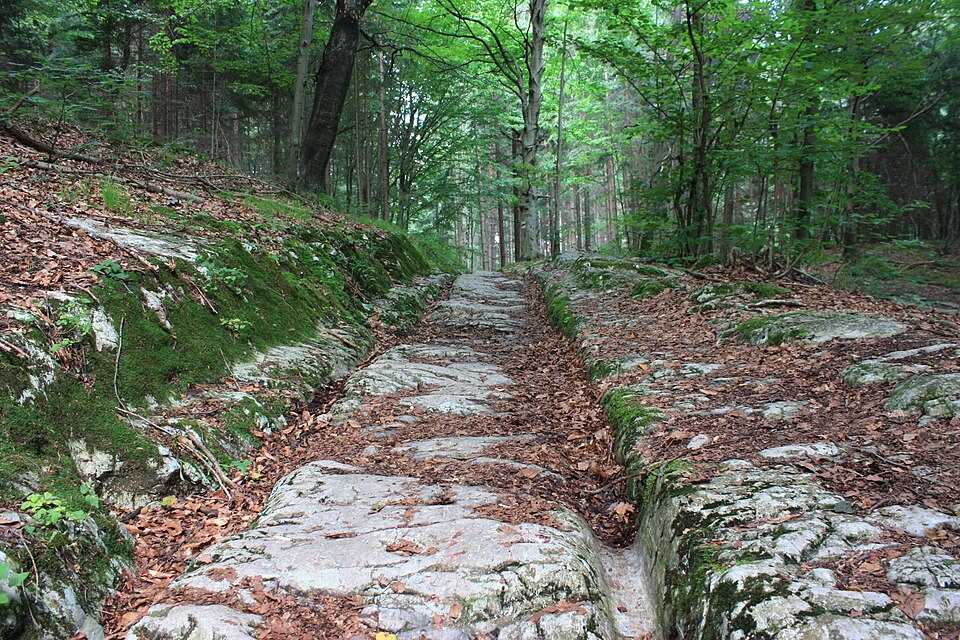
Les plus anciennes traces de présence humaine à Villach remontent au Néolithique final . De nombreux vestiges romains ont été découverts dans la ville et ses environs, car elle se situait à proximité d'une importante voie romaine (aujourd'hui appelée Römerweg ) reliant l'Italie à la province de Norique, fondée en 15 av. J.-C. À cette époque, une auberge nommée Sanctium se trouvait probablement près de la source thermale, dans l'actuel quartier de Warmbad, au sud du centre-ville. Après les Grandes Invasions et la colonisation slave des Alpes orientales vers 600 apr. J.-C., la région fut intégrée à la principauté de Carantanie .
When about 740 Prince Boruth enlisted the aid of Duke Odilo of Bavaria against the invading Avars, he had to accept Bavarian overlordship. An 878 deed of donation, issued by the Carolingian ruler Carloman of Bavaria, mentioned a bridge (ad pontem Uillach) near the royal court of Treffen, in what is today Villach.Otto II enfeoffed Bishop Albuin of Brixen with the Villach manor. After his death, King Henry II in 1007 ceded the settlement to the newly established Bishopric of Bamberg. The bishops also held the adjacent estates along the strategically important route to Italy up to Pontafel, which they retained until 1759 while the surrounding Carinthian ducal lands passed to the Austrian House of Habsburg in 1335.

Villach received market rights in 1060, though it was not mentioned as a town in records until about 1240. The parish church dedicated to St. James was first documented in 1136. Emperor Frederick II conferred the citizens the right to hold an annual fair on the feast of 25 July (Jakobitag) in 1222. The 1348 Friuli earthquake devastated large parts of the town; another devastating earthquake occurred in 1690. There were also several fires in Villach, which destroyed many buildings. The first documented mayor took office in the 16th century.
From 1526 onwards, many citizens turned Protestant and the Villach parish became a centre of the new faith within the Carinthian estates, which entailed harsh Counter-Reformation measures by the ecclesiastical rulers. From about 1600, numerous residents were forced to leave the town, precipitating an economic decline. In 1759 the Habsburg empress Maria Theresa formally purchased the Bamberg territories in Carinthia for a price of one million florins. Villach was incorporated into the "hereditary lands" of the Habsburg monarchy and became the administrative seat of a Carinthian district.
Durant les guerres napoléoniennes , la ville fut occupée par les troupes françaises et intégrée aux éphémères Provinces illyriennes à partir de 1809, jusqu'à sa reconquête par les forces de l' Empire autrichien en 1813 et son incorporation au royaume d'Illyrie d' Autriche en 1816. L'économie de la ville fut considérablement dynamisée par l'arrivée à Villach, en 1864, d'une branche occidentale de la ligne de chemin de fer du Sud , favorisant ainsi son développement. En 1880, la ville comptait 6 104 habitants. Pendant la Première Guerre mondiale , Villach, située près du front italien, abritait le commandement de la 10e armée de l' armée austro-hongroise .
La ville obtint le statut de ville le 1er janvier 1932 , durant l' entre-deux-guerres . Après l' Anschluss de l'Autriche à l' Allemagne nazie en 1938, le maire de Villach était Oskar Kraus, un nazi convaincu . Le 9 novembre 1938, Villach fut le théâtre des pogroms de la Nuit de Cristal, qui se déroulèrent à travers le pays et furent marqués par de violentes attaques contre la population juive . Un mémorial commémorant le conflit frontalier de 1919, qui mena au plébiscite de Carinthie , suscita la controverse lors de son inauguration en 2002, car seul le nom d'Oskar Kraus, qui n'avait pas joué un rôle particulièrement important dans ce conflit, y était inscrit.
Durant la Seconde Guerre mondiale , Villach a été bombardée 37 fois par les forces alliées . Environ 42 500 bombes ont tué 300 personnes et endommagé 85 % des bâtiments. Malgré cela, la ville s’est rapidement relevée. Aujourd’hui, Villach est une ville dynamique, où le commerce et les loisirs sont omniprésents, tout en préservant son riche patrimoine historique.
Le 15 février 2025, un garçon de 14 ans a été tué et cinq personnes blessées lors d'une attaque au couteau . Un demandeur d'asile syrien de 23 ans a été arrêté par deux policières.
Données démographiques
En 2024, Villach comptait 65 600 habitants ; 76,0 % d'entre eux possédaient la nationalité autrichienne et 74,9 % étaient nés en Autriche.
Les moins de 20 ans représentaient 17,4 % de la population, les 20-64 ans 60,5 % et les 65 ans et plus les 22 % restants. Les femmes représentaient 51,6 % de la population.
50.4% of foreign citizens held citizenship from another EU member state. When looking at individual countries, Germany and Bosnia and Herzegovina account for the largest shares of foreign nationals.
Municipal council
The municipal council (Gemeinderat) consists of 45 members, with the mayor acting as president. Since the 2021 local elections, it is made up of the following parties:
- Social Democratic Party of Austria (SPÖ): 25 seats
- Freedom Party of Austria (FPÖ): 7 seats
- Austrian People's Party (ÖVP): 6 seats
- Verantwortung Erde (ERDE): 5 seats
- The Greens - The Green Alternative (GRÜNE): 2 seats
The mayor of the city, Günther Albel, was re-elected in 2021.
City government
The city government of Villach (Stadtsenat) consists of seven members. It is chaired by the mayor. The other members—two vice-mayors and four town councillors—are appointed by the municipal council, with party affiliations according to the election results.
- Mayor Günther Albel (SPÖ)
- First Deputy Mayor Sarah Katholnig (SPÖ)
- Second Deputy Mayor Gerda Sandriesser (SPÖ)
- Councillor Harald Sobe (SPÖ)
- Councillor Erwin Baumann (FPÖ)
- Councillor Christian Pober (ÖVP)
- Councillor Sascha Jabali Adeh (ERDE)
Carinthian state election
The results of the 2023 Carinthian state election for Villach are as follows:
- Social Democratic Party of Austria (SPÖ): 43.36%
- Freedom Party of Austria (FPÖ): 25.25%
- Austrian People's Party (ÖVP): 11.10%
- Team Carinthia (TK): 8.61%
- The Greens - The Green Alternative (GRÜNE): 5.03%
- NEOS - The New Austria and Liberal Forum (NEOS): 2.90%
- Others: 3.64%
Austrian legislative election
The results of the 2024 Austrian legislative election for Villach are as follows:
- Freedom Party of Austria (FPÖ): 36.67%
- Social Democratic Party of Austria (SPÖ): 25.79%
- Austrian People's Party (ÖVP): 17.42%
- NEOS - The New Austria and Liberal Forum (NEOS): 8.71%
- The Greens - The Green Alternative (GRÜNE): 5.87%
- Others: 5.54%
European parliament election
The results of the 2024 European parliament election for Villach are as follows:
- Freedom Party of Austria (FPÖ): 32.12%
- Social Democratic Party of Austria (SPÖ): 29.78%
- Austrian People's Party (ÖVP): 14.20%
- NEOS - The New Austria and Liberal Forum (NEOS): 10.56%
- The Greens - The Green Alternative (GRÜNE): 7.85%
- Others: 5.49%
Twin towns—sister cities
Villach is twinned with:


Transport
Villach Hauptbahnhof is an important regional, national and international rail hub, located close to the city centre. The nearest airport is Klagenfurt Airport, located Friuli-Venezia Giulia (Northern Italy), and Slovenia. The name is derived from "K" standing for Kino (meaning "cinema" in German and Slovenian) and "3" referring to the fewest number number of legs necessary to create a solid table.
Other festivals
There are several other festivals throughout the year, including:
- The carnival in Villach (which starts on November 11 and ends on March 4)
- Villacher Fasching or Mardi Gras
- Kunsthandwerkmarkt - arts and crafts festival
- The streets-art festival (displays performances of artists and singers)
- The Villacher Kirchtag (a festival spanning a whole week in summer and ends on August's first Saturday)
- DRAUPULS - light shows on the Drau river
Notable citizens


- Ludwig Willroider (1845–1910), an Austrian landscape painter and etcher.
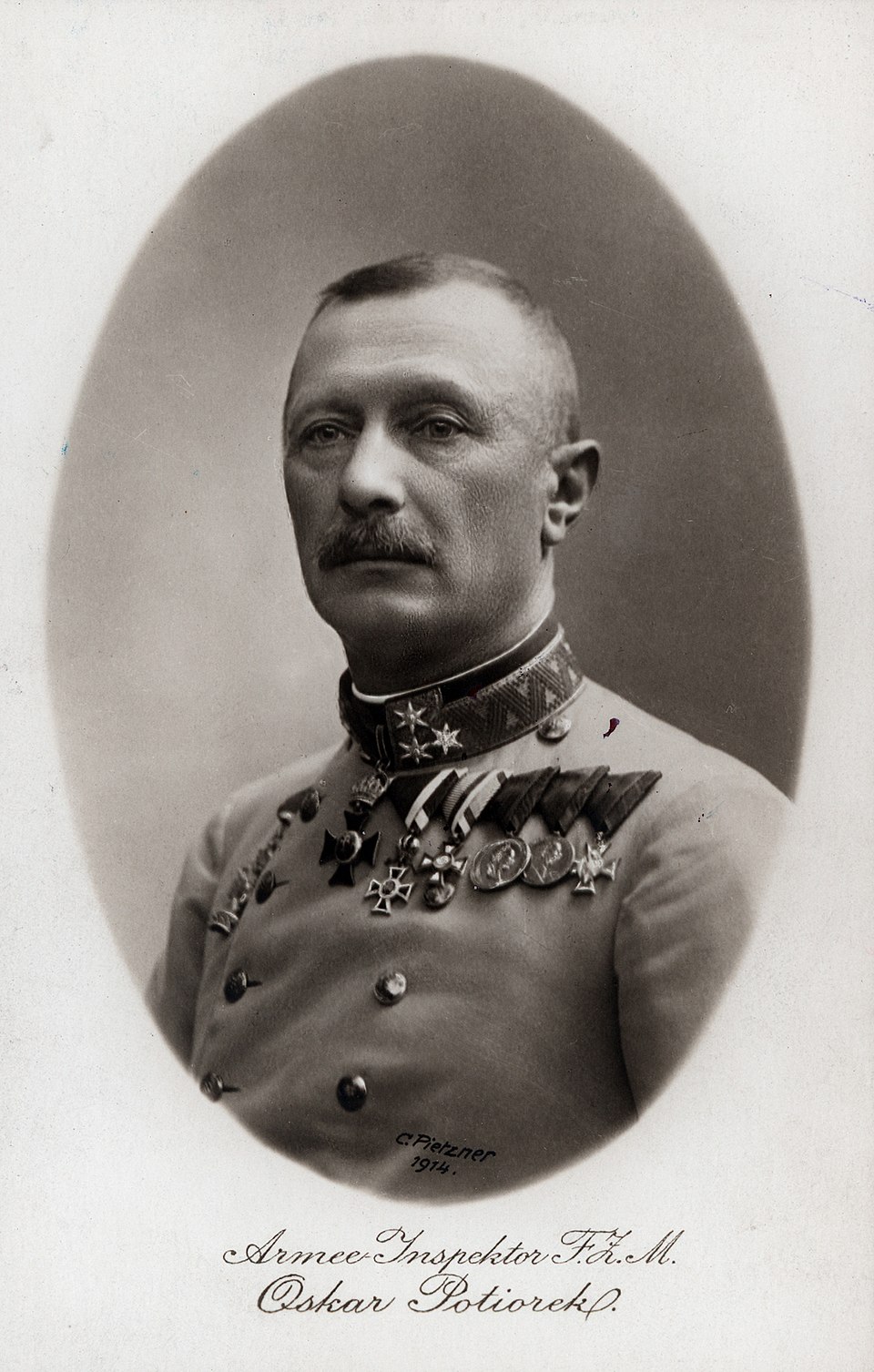
- Oskar Potiorek (1853 in Bad Bleiberg – 1933), Austro-Hungarian Army officer, Governor of Bosnia and Herzegovina in Sarajevo from 1911 to 1914, when Archduke Franz Ferdinand of Austria was assassinated there
- Anton Ghon (1866 in Villach – 1936), Austrian pathologist viz Ghon focus and Ghon's complex
- Oskar Kraus, (DE Wiki) (1887–1973 in Villach), mayor of Villach 1938–1945
- Hans Kurath (1891 in Villach – 1992), American linguist, emigrated to the US in 1907
- Carl-Heinz Birnbacher (1910 in Villach – 1991), German naval officer, Vice admiral of the German Navy
- Albert Bach (1910 in Treffen – 2003), soldier, Generalmajor, and skier, competed at the 1936 Winter Olympics.
- Gisela Tschofenig (1917 in Villach – 1945), Austrian resistance activist
- Heidemarie Hatheyer (1918 in Villach – 1990), film actress, appearing in 43 films between 1938 and 1988
- Paul Watzlawick (1921 in Villach – 2007), Austrian-American therapist, psychologist and communications theorist.
- Kurt Diemberger (born 1932), author and mountaineer
- Bruno Gironcoli (1936 in Villach – 2010), Austrian modern artist
- Heidelinde Weis (1940–2023), Austrian actress
- Peter Brabeck-Letmathe (born 1944 in Villach), former CEO of the Nestlé Group and of Formula One Group
- George Zebrowski (born 1945 in Villach), American science fiction author and editor
- Zoltan J. Acs (born 1947 in Villach), American economist and Professor of Management at The LSE
- Felix Tretter (born 1949 in Villach), Austrian psychologist, psychiatrist and cybernetician
- Werner Kofler (1947 in Villach – 2011), Austrian postmodernism novelist
- Konrad Paul Liessmann (born 1953), philosopher, essayist and cultural publicist.
- Gerald Kargl (born 1953 in Villach), Austrian film director, directed the 1983 film Angst
- Wolfgang Ilgenfritz (1957 in Villach – 2013), Austrian politician and notably a non-attachedMEP
- Gernot Rumpold (born 1957 in Villach), Austrian politician, associate of Jörg Haider
- Peter Löscher (born 1957 in Villach), Austrian businessman with Merck & Co and former CEO of Siemens
- Michael Martin Kofler (né en 1966), flûtiste classique de l' Orchestre philharmonique de Munich
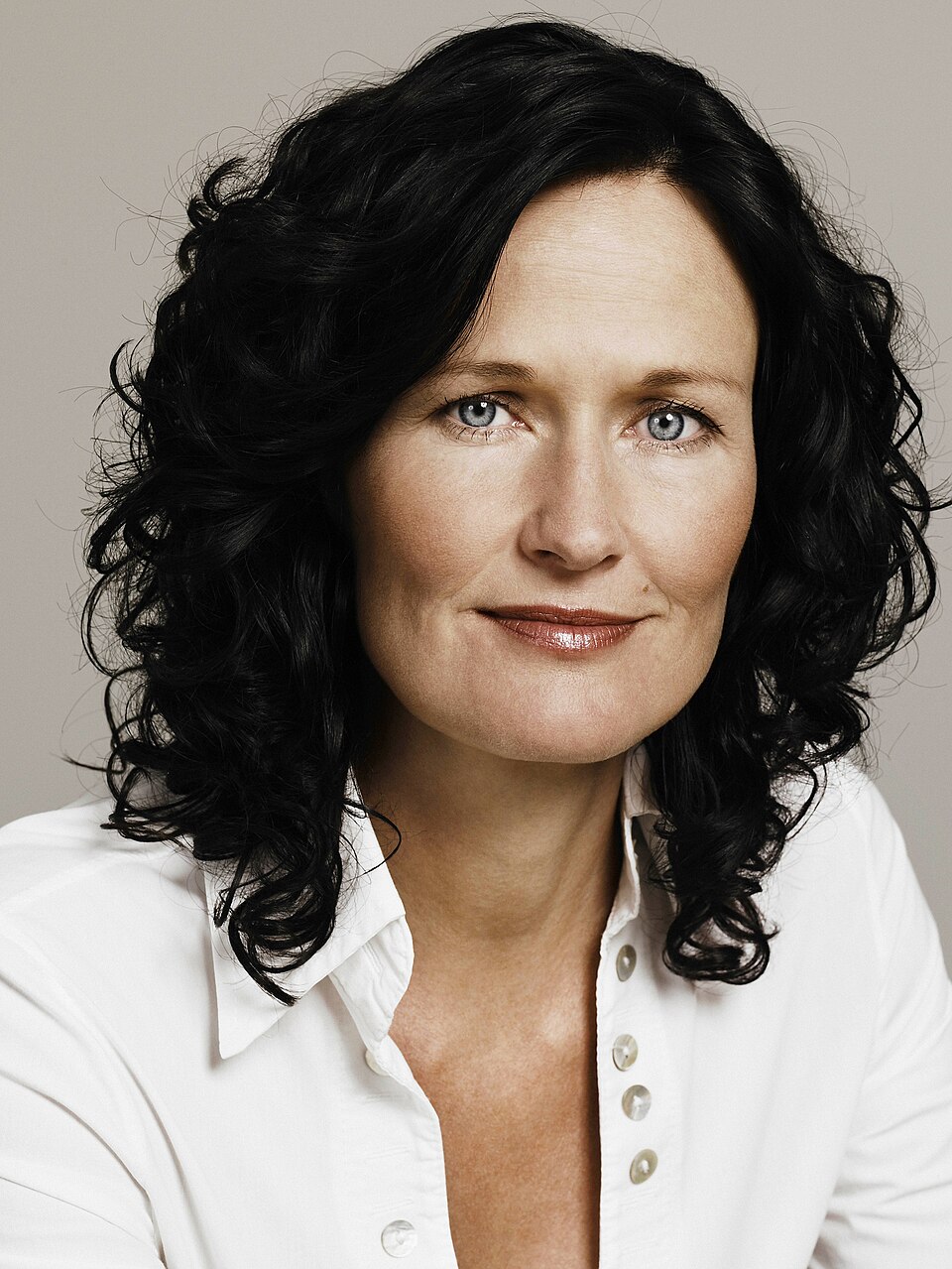
- Eva Glawischnig-Piesczek (née en 1969 à Villach), femme politique autrichienne du Parti vert autrichien
- Alexander Kaimbcher (né en 1969), ténor d'opéra autrichien
- Thomas Smolej (1982 à Villach), acteur et réalisateur autrichien
- Florian Hufsky (1986 à Villach – 2009), artiste autrichien des nouveaux médias, membre du conseil d'administration du Parti pirate d'Autriche
Sport
- Ernst Melchior (1920 à Villach – 1978), footballeur autrichien ayant évolué à l'Austria Vienne , au FC Rouen et au FC Nantes , a disputé près de 400 matchs et 36 sélections en équipe nationale autrichienne.
- Hanns Brandstätter (né en 1949 à Villach), escrimeur ; a participé aux Jeux olympiques d'été de 1972 , 1976 et 1984.
- Alex Antonitsch (né en 1966 à Villach), ancien joueur de tennis autrichien, est devenu professionnel en 1988.
- Christian Mayer (né en 1972), ancien skieur alpin, double médaillé de bronze aux Jeux olympiques d'hiver de 1994 et 1998
- Bärbel Jungmeier (née en 1975 à Villach), cycliste sur route et vététiste, a participé aux Jeux olympiques d'été de 2004.
- Gerhard Unterluggauer (né en 1976 à Villach), ancien défenseur professionnel autrichien de hockey sur glace
- Roland Kollmann (né en 1976 à Villach), ancien footballeur du Grazer AK , a disputé 343 matchs et 11 sélections avec l'Autriche.
- Daniel Mesotitsch (né en 1976 à Villach), biathlète autrichien deux fois médaillé olympique par équipe
- Jürgen Pichorner (né en 1977), un milieu de terrain autrichien qui a disputé plus de 330 matchs.
- Friedrich Pinter (né en 1978 à Villach), ancien biathlète autrichien
- Martin Koch (né en 1982 à Villach), ancien sauteur à ski, médaillé d'or par équipe aux Jeux olympiques d'hiver de 2006
- Michael Grabner (né en 1987 à Villach) est un joueur de hockey sur glace professionnel autrichien évoluant au sein des Rangers de New York en LNH.
- Marc Sand (né en 1988 à Rosegg ), footballeur autrichien, qui joue pour le SK Austria Klagenfurt
- Michael Raffl (né en 1988 à Villach) est un ailier gauche professionnel de hockey sur glace évoluant au poste d'ailier gauche pour les Stars de Dallas en LNH.
- Guido Burgstaller (né en 1989 à Villach), footballeur évoluant au Rapid Vienne , a disputé 26 matchs avec l'Autriche.
- Christopher Wernitznig (né en 1990), un footballeur autrichien qui a disputé plus de 470 matchs.
- Anna Gasser (born 1991 in Villach), snowboarder, two-time Olympic gold medalist in Big Air (2018 and 2022)
- Marco Schwarz (born 1995 in Villach), Austrian World Cup alpine ski racer
- Christopher Höher (born 1997 in Villach), Austrian racing driver
- Daniela Ulbing (born 1998), an Austrian snowboarder, silver medallist at the 2022 Winter Olympics
Plus d articles de Worldlex Wiki
Revenez a l index pour explorer davantage de pages sur l histoire, la science, la culture, la geographie et la societe en francais.
Explorer l index